Write facts before explanations
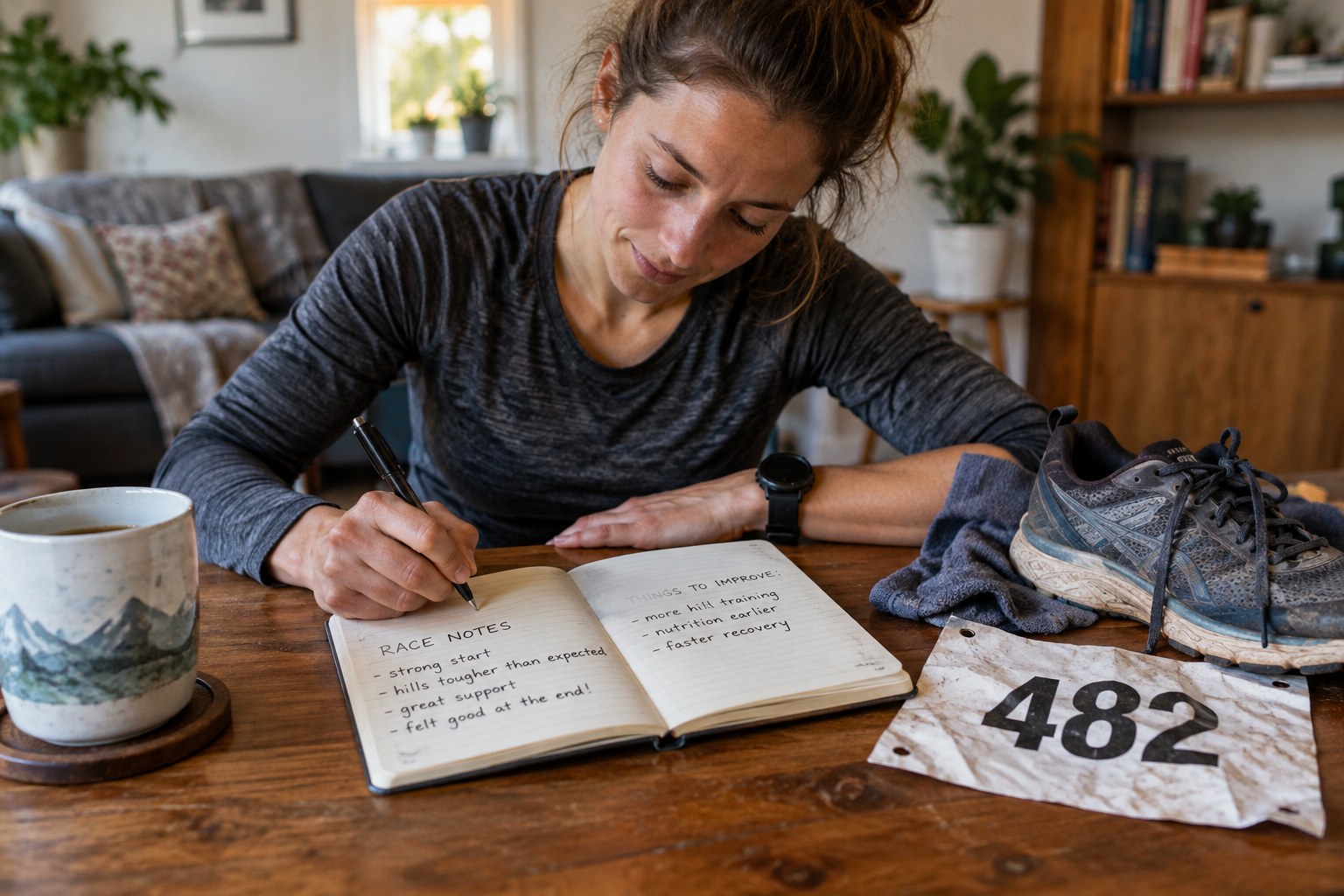
Record the event, distance, date and conditions you actually experienced. Note the arrangements that affected the day: collection, transport, start access, route features and the return. Separate these observations from conclusions about why your performance changed. Feeling rushed before the start is something you can describe; claiming that it explains every later difficulty is a much larger inference.
Keep a few concrete moments rather than a complete kilometre-by-kilometre reconstruction. Perhaps a pocket was hard to close, a particular climb surprised you or the meeting plan worked smoothly. These details remain useful even if you never run the same event again. A finish time alone does not tell you which part of the preparation to retain.
Review the plan against the day
Look at what you intended and what actually happened. Where did you make a deliberate adjustment, and where did you simply lose track of the plan? A sensible response to weather or terrain should not be recorded as a failure merely because it differed from a prediction. Conversely, a comfortable result does not make an avoidable organisational risk a good habit.
For equipment, identify the item and the conditions in which it worked or failed. Shoes that felt fine on one surface have not thereby been tested on every other one. A jacket carried but never worn tells you about packing, not its behaviour in rain. State the limits of the observation so that your future self does not turn a narrow experience into a general claim.
Use a three-column note when an explanation feels too certain: observation, possible cause, next check. For instance, you noticed that opening a pocket took both hands. Possible causes include the angle of the zip, the amount packed or how the vest was adjusted. The next check is a short familiar outing with the same load and one change, rather than immediately buying a replacement vest. This keeps the review connected to something you can examine.
Comparisons between races need similar care. A slower result on a different route does not isolate one cause when surface, weather, congestion and preparation all changed. Preserve the numbers, but write the differences beside them. You can still learn from the day without ranking it against every previous finish. For a public review, describe a queue or a closure you encountered at a particular time instead of declaring that the whole event was disorganised for everyone. Specific boundaries make the account both fairer and more reusable.
End with decisions you can test
Choose a small number of changes. Each should connect to an observation: use a different pocket for the phone because the current one required stopping, or select an earlier train because the walking approach took longer than planned. Keep successful arrangements too. A review that only lists problems can lead you to replace things that were already working.
Leave room to revisit your interpretation after the immediate emotion has faded. You may remember an awkward moment more strongly than the rest of an otherwise well-managed day. Add a later note rather than rewriting the original record to suit a new mood. If you share the review publicly, distinguish personal experience from event facts and avoid speaking for participants whose day you did not observe.