Approach as someone sharing the path
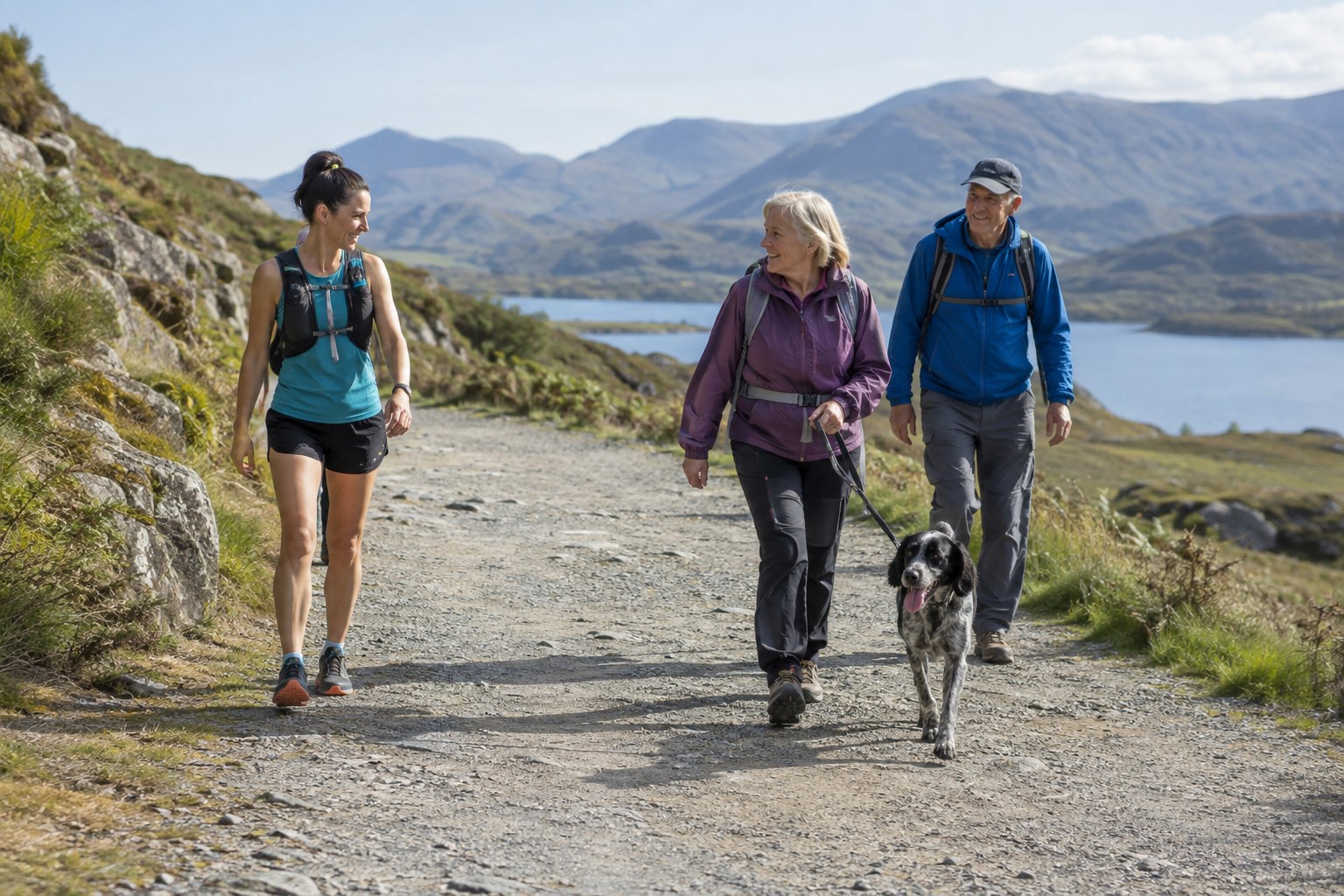
Notice how much space is actually available. A family spread across a broad track can rearrange easily; a person negotiating roots on a narrow path may have nowhere to step. Reduce your speed before the encounter rather than arriving close behind and expecting an immediate opening. Your view from a few metres back may be better than theirs.
Use a friendly, audible greeting and give the person time to respond. Avoid treating a louder shout as a substitute for patience. They may not hear you clearly, may be wearing a hood or may be concentrating on someone in their care. If the message is uncertain, remain behind at walking pace until a suitable place appears.
Make your intention easy to understand
When there is room, say where you intend to pass and check that this matches the space they have offered. Do not change sides at the last moment. Leave a comfortable gap rather than brushing past because you can technically fit. A brief thank-you also confirms that the encounter is finished and everyone can resume their own pace.
With a group of runners, tell the walkers if more people are following. Otherwise, someone may step back into the path after the first runner passes. Avoid stretching the pass into a long series of surprises: regroup before a narrow section when possible and keep the exchange calm. No one should feel required to stand off the trail for an indefinite procession.
Accept the places where running pauses
Gates, bridges, viewpoints and steep steps naturally concentrate people. Walk through these areas and wait when needed. Trying to maintain an uninterrupted running record creates pressure at exactly the places where attention and space are limited. You can choose a quieter time or a different route for an outing that needs fewer interruptions.
If an encounter becomes awkward, prioritise making space and moving on rather than arguing about who should have reacted first. Afterwards, use it to review your own approach: were you visible, was the greeting early enough, and did the path genuinely offer room? Sharing a route well is a sequence of small, observable actions, not an assumption that other users understand a runner’s intentions.