Keep one part of the outing familiar
Choose an accessible path near a park or village you already know. Look for a route with a clear entrance, a modest change in height and a simple return. If you normally run a level circuit, moving onto uneven ground is already a change. Adding a remote starting point and an ambitious climb makes it harder to identify what caused difficulty.
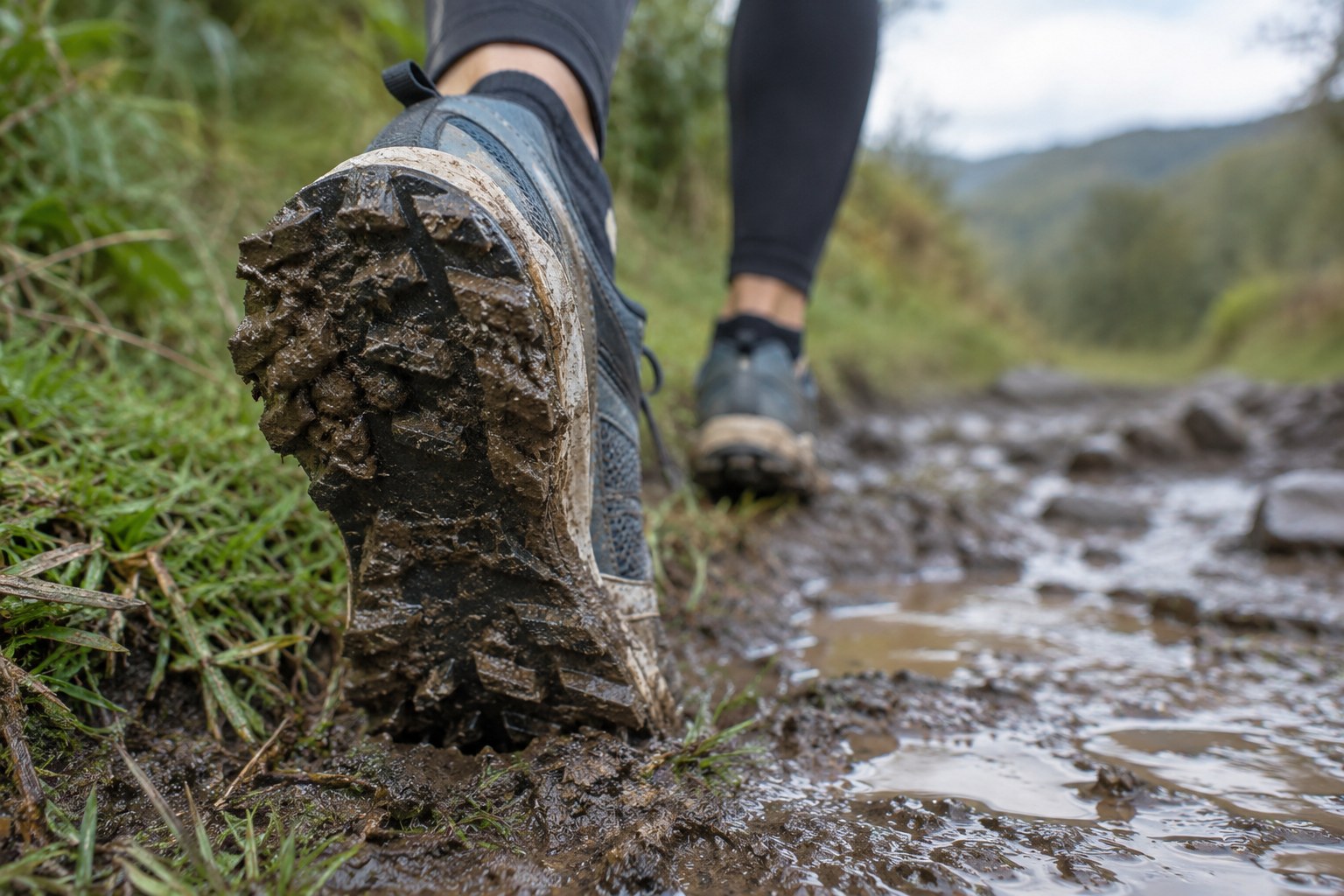
Read the route description for the surface rather than relying on the label trail. A broad woodland track and a narrow hillside path can share that label while asking very different things of you. Photographs can help, but an image taken in dry summer weather does not establish what the path looks like after rain. Check current access information and the forecast before leaving.
Run the easy ground and walk the questions
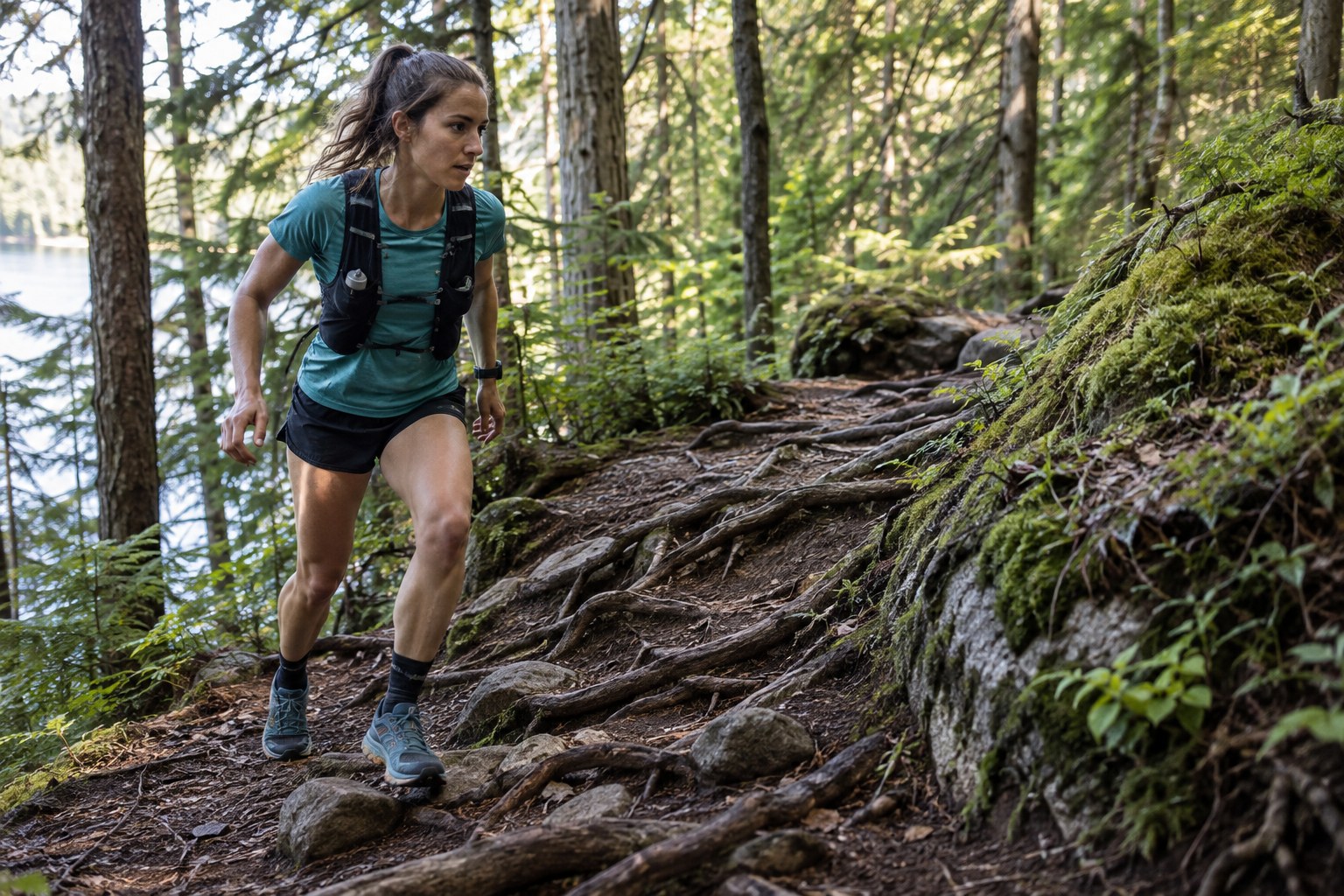
Begin on the broadest part and let your speed respond to what you see. Walk across a rough patch if you cannot yet choose comfortable foot placements. This gives you time to notice loose stones, roots and changes in camber without treating every hesitation as a failure. Avoid comparing the pace with your usual road outing; interruptions and uneven footing change the task.
A useful first loop might include a clear track, a short rise and a return on the same track. You can repeat a familiar section if everything feels straightforward, but you do not need to extend the route just because the first part went well. Save enough attention for the return, when the same ground may look different from the opposite direction.
Bring back observations you can use
Take what you need for the actual setting: a way to navigate, suitable clothing, water as appropriate and a secure place for keys and phone. Check how those items move before getting far from the start. A pocket that works on level pavement may become awkward when you bend, step over something or slow to walk.
Afterwards, note the specific surface or situation that interrupted you. Was it a slippery slope, uncertainty at a junction or simply carrying too much? Plan the next outing around that observation. Choosing another short, accessible route allows you to improve familiarity without assuming that a successful first trail proves readiness for a long or exposed mountain route.