Describe the outing before comparing soles
A wet field path, a muddy woodland climb and a route with long stretches of pavement do not make the same demands. Write down the main surfaces and where you would be able to turn back. A shoe selected for one soft section still has to carry you along the approach and return. Avoid choosing from the most dramatic photograph in a route description.
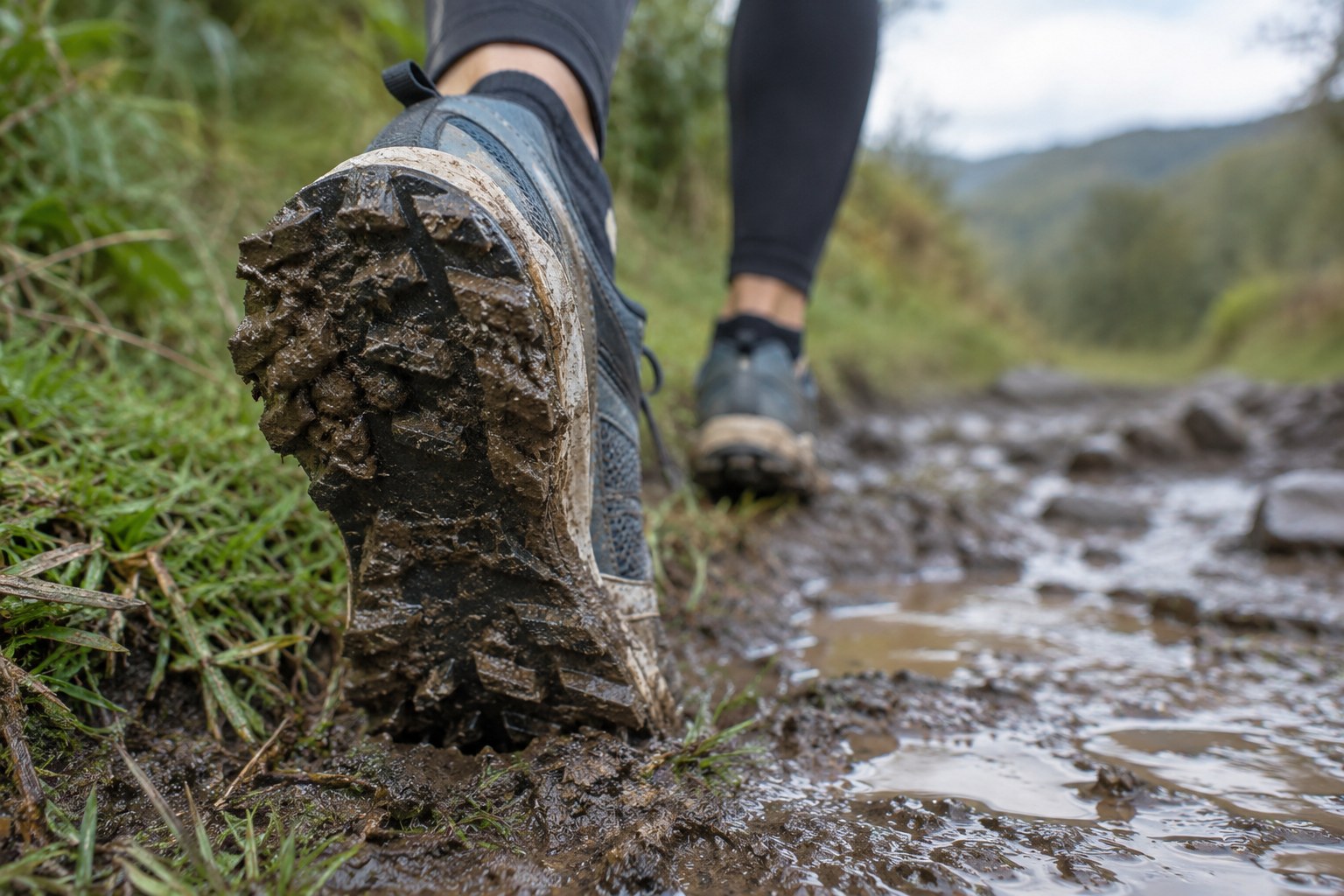
Inspect the outsole of the pair you already own. Check whether the tread is worn, clogged or damaged, then read the manufacturer’s intended-use description. Tread shape is one part of the decision, not a promise that the shoe will hold on every wet surface. Mud, smooth stone, timber and ice should not be treated as interchangeable versions of slippery ground.
Fit still matters when the sole looks suitable
Try footwear with the socks you intend to wear and secure it without crushing the top of the foot. Walk, turn and use an appropriate shop ramp if one is available. Pay attention to heel movement and toes meeting the front. A sole that seems suited to soft ground does not compensate for a shoe that shifts around your foot whenever the direction changes.
Think about the whole wet outing rather than demanding that the shoe stay dry in every circumstance. Water can enter over a collar, and different constructions manage wetness differently. Compare the actual product description and care instructions instead of assuming a waterproof label means dry feet regardless of depth or duration. Choose socks and a change of footwear for the finish with the same conditions in mind.
Leave the route open to revision
Use a short, familiar section to learn how the combination behaves. Slow down before the muddy patch, keep away from uncertain edges and avoid widening the trail by trampling vegetation. If the ground offers no comfortable passage, turn back or choose a different route. Footwear is not a reason to push through conditions you would otherwise reject.
Afterwards, remove the loose mud according to the shoe’s care guidance and inspect the tread again. Note where the problem occurred: sliding on a slope, an insecure heel or mud building around the sole. That description is more useful when discussing another pair than simply saying the shoe was bad in the wet. It may also reveal that a different route would solve the immediate problem without a purchase.