Notice what has changed
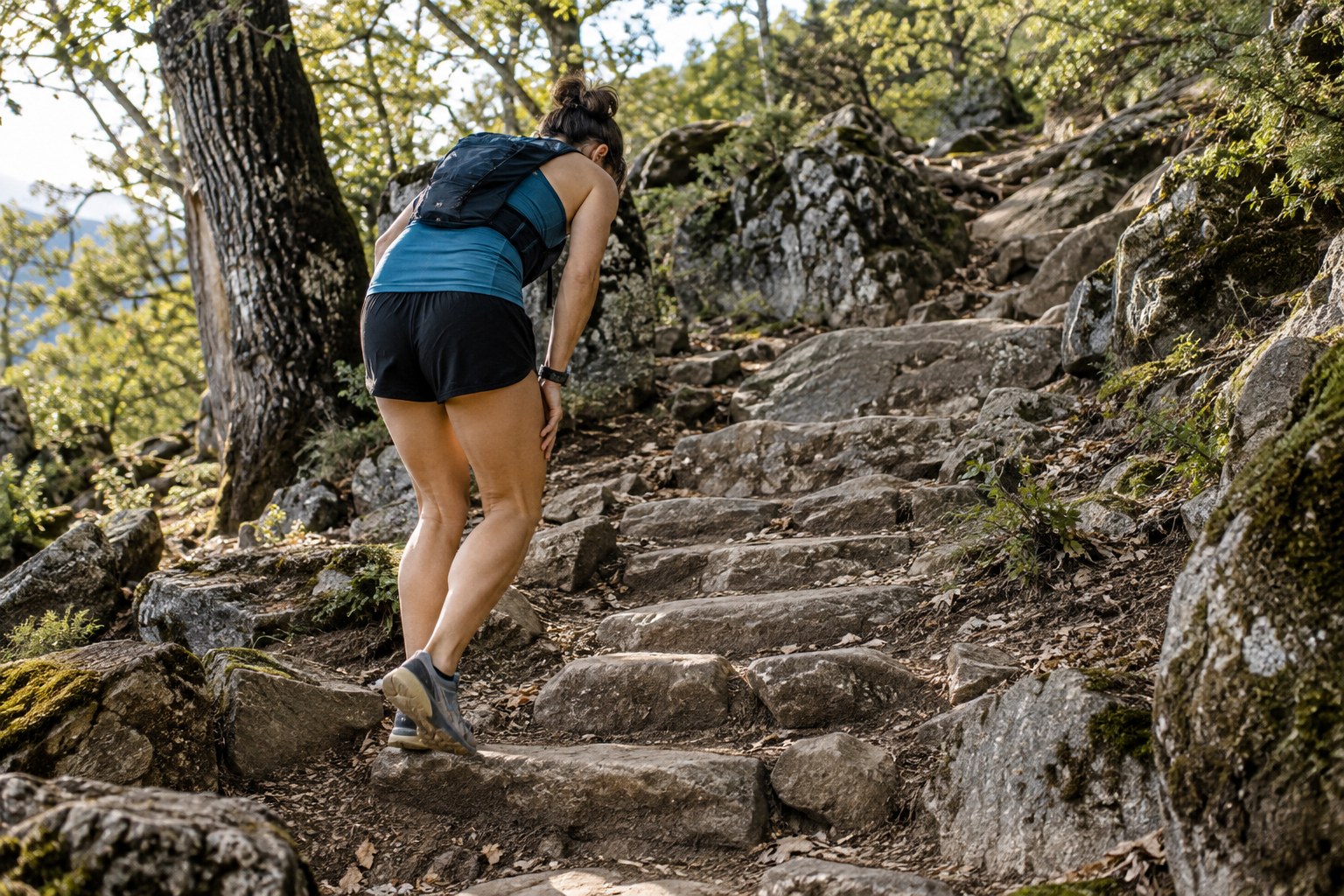
Perhaps the path narrows, the steps become large or you need to inspect every foothold. You may be using your hands for balance or struggling to see a comfortable line. Those observations matter more than a description calling the route runnable. Stop trying to preserve the original pace and give the new terrain a separate decision.
Walking is appropriate when it gives you the time and stability to understand the next section. It is not a universal answer to terrain beyond your skills. If the route becomes scrambling, exposed ground or conditions requiring equipment and experience you do not have, reassess the route rather than assuming that slower movement solves the problem.
Recalculate the outing honestly
Look at how much of the route remains and whether the difficult section continues. A short walking passage within a familiar loop is different from a long stretch that changes the return time. Check daylight, weather and the transport arrangement. Do not keep using a road-running estimate once the actual progress has become mostly walking.
In a group, ask whether everyone is comfortable with the revised activity. Someone who agreed to an easy run may not have agreed to a long, awkward hike. Avoid presenting the change as a small inconvenience when it alters the nature of the outing. Returning on known ground can be a better shared decision than persuading the least comfortable person to continue.
Use the experience to describe routes better
Afterwards, record the actual features rather than only a difficulty label. Write that the route included high steps, a narrow traverse or a long uneven descent. Note where the walking began and whether there was an earlier exit. These details help you and companions decide whether another visit fits the intended outing.
When sharing the route, distinguish between your pace choice and an objective access issue. You may have walked a perfectly open path because that suited you; a closure or damaged crossing is different information. Clear descriptions avoid turning personal confidence into a misleading guarantee for someone else. The useful outcome is not proving that every trail can be run, but choosing how and where to travel with an accurate picture of the ground.