Turn the rule into a table
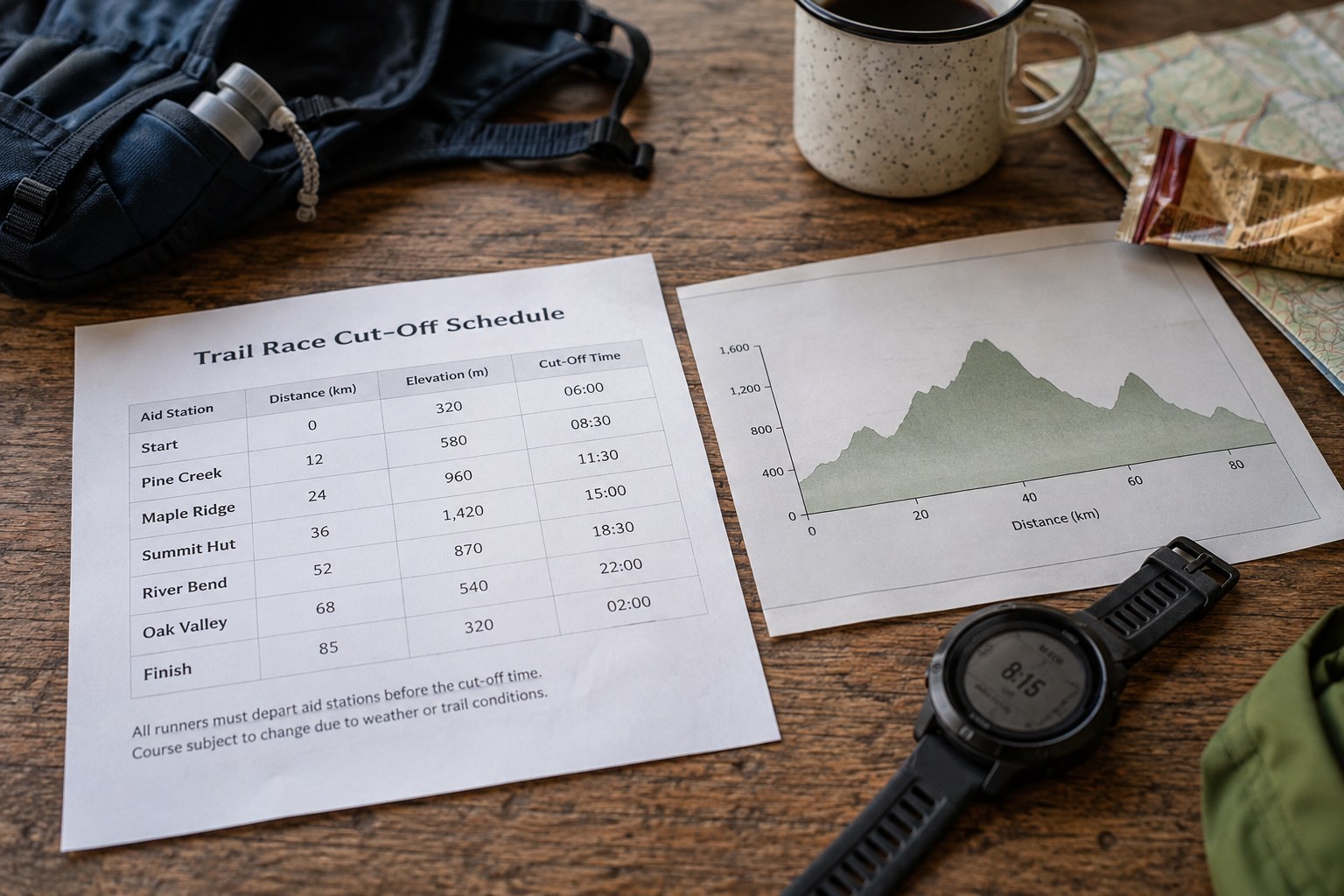
Find the current official rules for the exact distance you are considering. Copy the checkpoint names, distances if provided, and closing times into a short table. Keep the original wording nearby. A total time limit at the finish is not the same as a series of intermediate deadlines, and meeting one does not guarantee that the next will be comfortable.
Check the time reference. The organiser may specify clock times, elapsed time from a common start, or arrangements linked to different waves. Do not assume your individual watch start controls the official deadline. If a statement could mean either arrival at or departure from a checkpoint, ask the organiser to clarify it. That distinction can matter when a station includes a kit check or a longer stop.
Read the terrain between the lines
Place the checkpoints on the course profile and map. Equal distances do not mean equal travel times on a trail. A technical descent, a sustained climb or a narrow early section can change the time needed between points. The table becomes more useful when it is attached to terrain rather than reduced to one average speed for the whole event.
Compare the demands with outings you have actually completed in reasonably similar conditions. A road pace is a poor standalone reference for an unfamiliar mountain route. Be explicit about what is unknown: surface, weather, elevation, navigation or the ability to keep moving late in the day. Uncertainty is information for the entry decision, not something to erase by selecting an optimistic estimate.
Include stops and shared space
A moving-time estimate omits everything that happens while stationary. Repacking, refilling, checking equipment and using an aid station still occur within the event’s schedule unless its rules say otherwise. Include those tasks when you think about the available margin. Do not build a plan that requires skipping a necessary stop simply to make a spreadsheet look viable.
Early congestion is another reason not to treat a theoretical pace as a guarantee. Narrow paths can slow a group, and trying to force a pass may be inappropriate. Look for the organiser’s description of the start and route rather than assuming that every minute lost can be recovered on the next descent. A workable event choice should not depend on taking risks to remain inside a limit.
Know what happens at the deadline
Read the withdrawal and transport procedure together with the cut-offs. Find out what participants must do if directed to stop, where they should report and how return arrangements are described. Do not assume that missing a deadline simply turns the rest of the route into a supported recreational outing. The event’s staffing and permissions may no longer cover continued participation.
Keep the relevant instructions accessible during the race, but make the main decision before entering. If the margins depend on a substantial improvement you have not yet demonstrated, a shorter or less complex event may give you a more suitable first experience. This is not a verdict on your future ability; it is a choice about this particular route and operating timetable.
After entry, monitor official updates. A revised route can change checkpoint positions or timing arrangements. Replace outdated copies in your bag or phone so that you do not consult an old table at the very moment it matters. When in doubt on the course, follow the organiser’s current instructions rather than arguing from a screenshot saved months earlier.