Find information for the actual forest
Identify the forest and its manager rather than searching only for a nearby town. In French state forests, ONF publishes hunting calendars, but the relevant document still needs to match the location and season. Check the dates and the area named. Save the information you need while you have reception, together with an alternative route elsewhere.
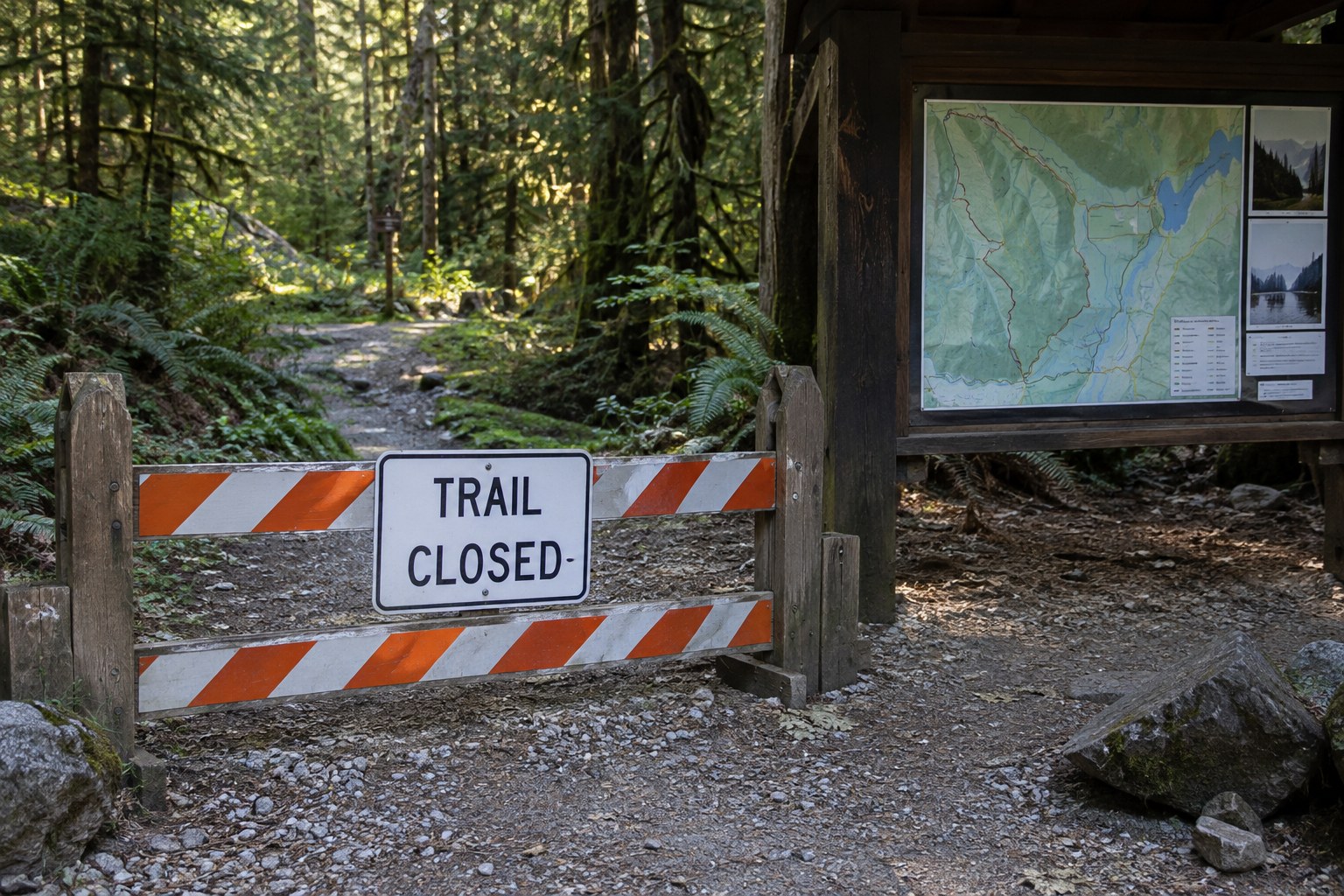
A calendar is one input, not a reason to ignore a notice at the trailhead. Read current signs and respect closures or instructions from authorised personnel. Do not enter a marked hunting area because your downloaded file follows that path. Equally, do not invent a general access rule for every forest from the arrangements at one location.
Make a route change before entering
If the planned section is unavailable, use a different authorised route whose access you can establish. Avoid tracing a close detour along the edge of the activity merely to preserve the outing’s distance. A clear alternative in another area is easier to understand than an improvised sequence of tracks around signs you have only partly read.
Tell companions about the change before leaving the parking area. Confirm the new start, return and expected timing. If someone is meeting you later, update that arrangement when possible. Changing the map without changing the shared plan can leave another person waiting at the original exit while the group assumes the decision was obvious.
Match the notice to the ground
A notice may name a forest compartment, road or entrance that is unfamiliar to you. Before deciding that it concerns another part of the forest, locate the name on the accompanying map or the manager’s current information. Check whether your route enters that area later, even if the first section starts elsewhere. A loop can cross several named sectors while its downloaded title mentions only the starting village.
If the boundary remains unclear, do not explore towards the activity to find out where the restriction begins. Use an alternative whose access is established, or contact the manager before returning. In a group, compare the same dated notice rather than combining one person’s calendar with another person’s old screenshot. State the conclusion simply: which route is available, which section is being avoided and where the new return goes. This prevents a later junction decision from reopening a question that was never properly resolved.
Keep records useful without making them permanent
Note the official page or contact that provided the information, so you can find the next update. Do not rely on a screenshot circulating in a group chat without its date or forest name. When sharing a notice, include that context and encourage others to verify their own outing rather than presenting your saved copy as a standing guarantee.
If information conflicts, choose the option that does not require entering an uncertain area and seek clarification through the manager’s published channels. A high-visibility garment is not a substitute for respecting a restriction. The most useful preparation is a route that can be changed calmly, with enough time to travel to the alternative instead of feeling compelled to use the place where you have already parked.