Find the intended access
Check signs and the mapped public route before touching a gate. An open-looking field is not evidence that every entrance is available. Use the designated access and follow the instructions given at that location. If a closure makes the intended route unavailable, choose an authorised alternative rather than climbing a neighbouring fence to keep the original line.
Approach calmly when livestock are nearby. Give animals space and avoid running into the middle of a group. If their position prevents a comfortable passage, wait at a distance or turn back. Do not use food to move animals or attempt to rearrange them. A route choice should not depend on handling unfamiliar livestock.
Make the gate a group task
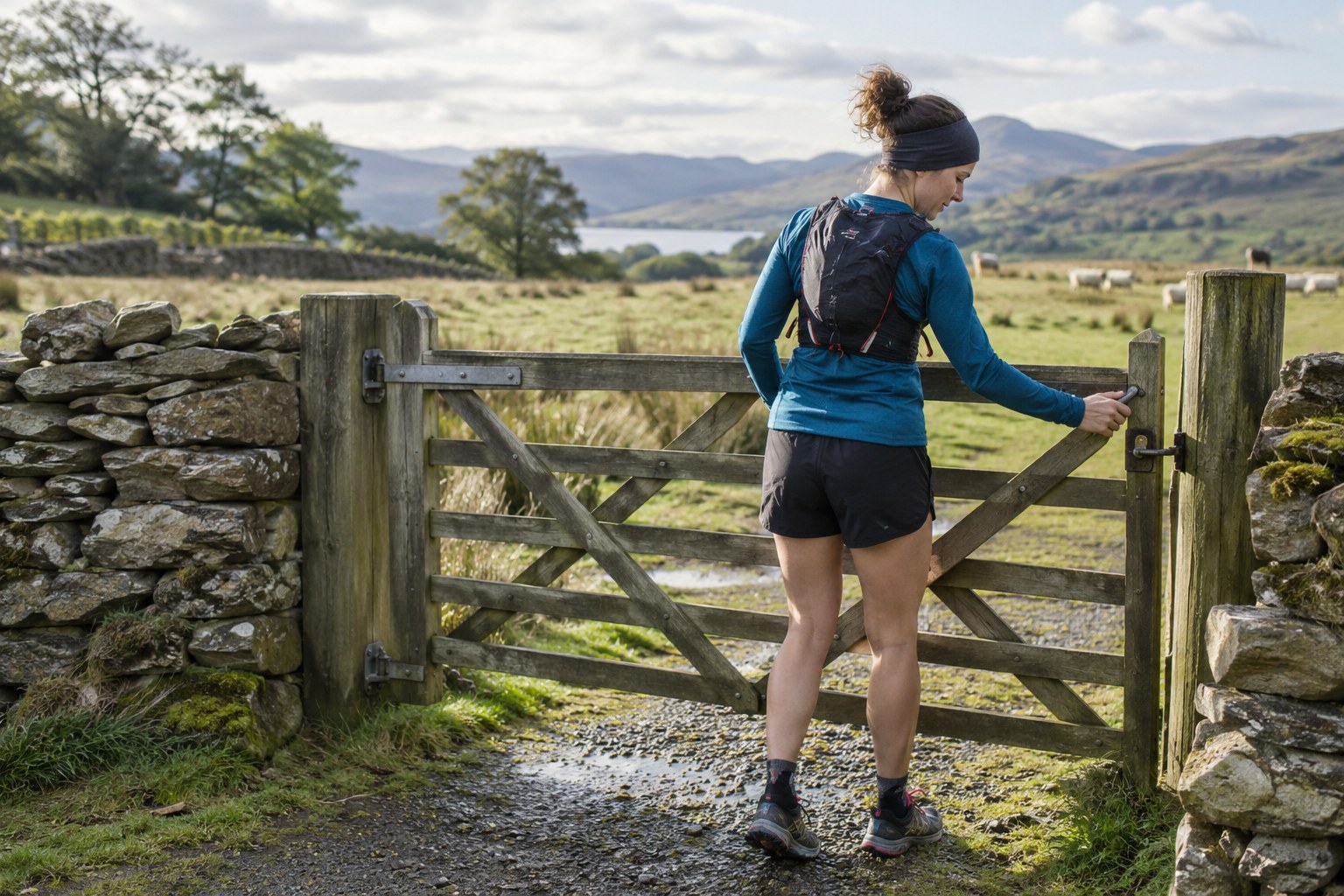
Stop running before the latch and work out how it opens. Keep fingers clear of moving parts and control the gate so it does not swing into a companion. Avoid leaving it resting awkwardly against a backpack while someone searches for a phone or adjusts clothing. Finish the crossing before taking on another task.
In a group, agree who is last through and who will secure the gate as required by the site instructions. Do not assume that the person behind you will automatically take responsibility. A simple spoken handover prevents the gate from being abandoned half-closed because everyone thought someone else was dealing with it. Check the fastening rather than judging only by how the gate looks from a distance.
Treat problems as route information
If a latch is damaged, do not improvise a repair that could trap an animal or create a new hazard. Keep clear and inform the land manager through an appropriate contact if available. Describe the location precisely; a photograph taken from the path may help, but avoid including people unnecessarily. Do not advertise an improvised gap as a new public entrance.
When planning another outing, allow for these crossings in your timing. A route through working countryside includes pauses for gates, signs and animals. If the aim is an uninterrupted effort, choose somewhere that better supports it. Accepting those interruptions makes the route easier to share and removes the temptation to rush a latch or squeeze through without checking what happens behind you.