Revisit a route you can describe
Choose a short circuit you know in daylight, with straightforward footing and a clear way back. Check that access is permitted at the time you intend to use it. A park or woodland entrance that is open in the afternoon may have different arrangements later. Know where you will park or arrive and how you will leave after the outing.
Walk through the main decisions in your head: the first turn, a narrowing section, the return junction and the finish. If you cannot describe them, review the map or choose a simpler route. Familiarity should come from actually understanding the path, not just having followed another person there once. Avoid exposed terrain for this first experiment.
Learn the lamp before the trail
Read the instructions for your headlamp and test the controls near home. Find the working mode, the adjustment and the lock function if it has one. Check the charge or batteries and arrange an appropriate backup. A phone screen is not a prepared replacement for a lamp needed to see the path; keep communication and lighting needs in mind separately.
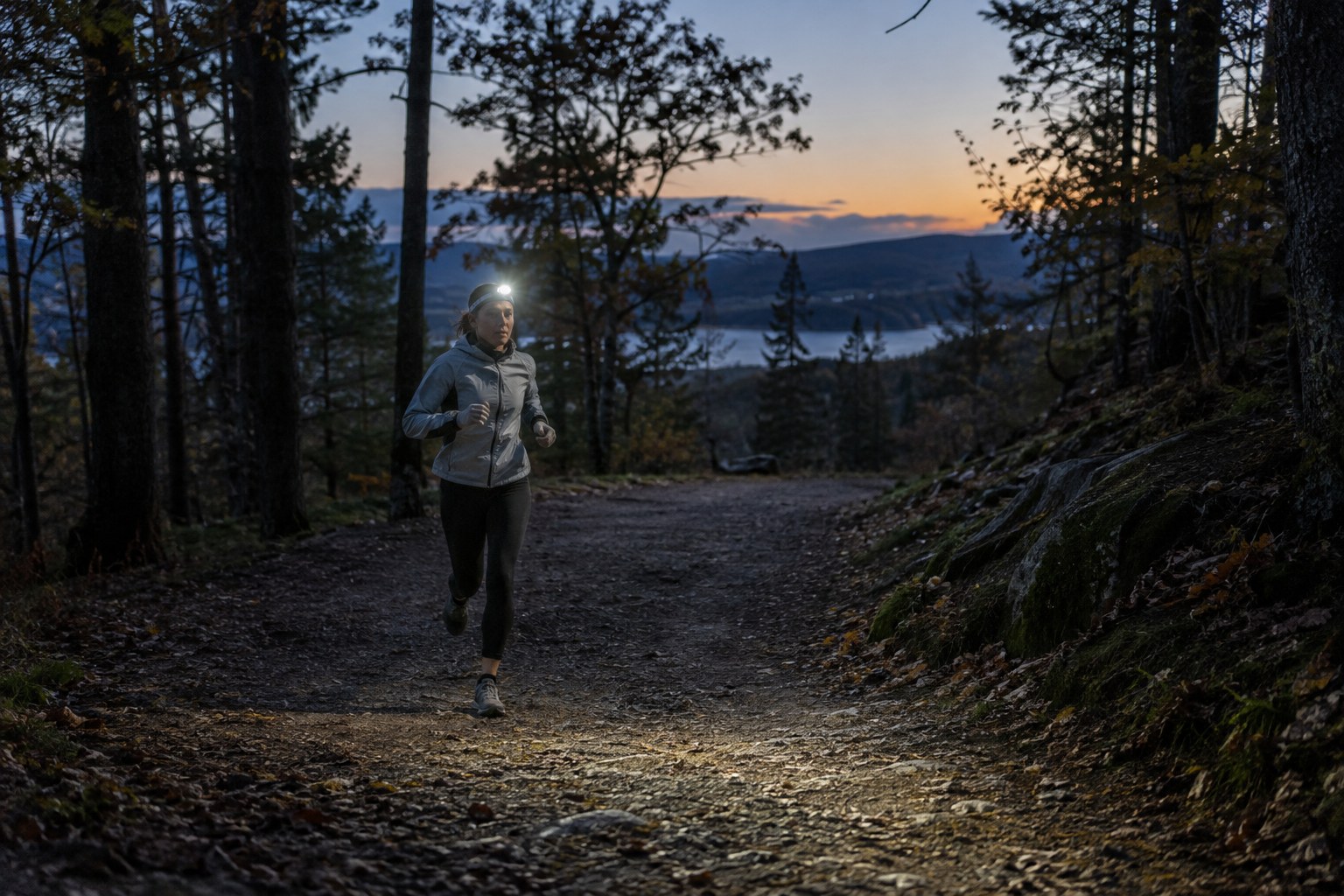
Try the fit while walking and jogging on safe ground. Notice whether the beam moves excessively or the strap presses awkwardly. Test with the hat or hood you expect to wear. Petzl’s night-running guidance emphasises practising the lamp’s modes and controls before relying on it during an outing. The useful result is a setup you can operate without guessing in the dark.
Keep the route predictable for the whole group
If a companion knows the circuit better, ask them to describe the key turns before you leave rather than simply promising to follow. Agree that everyone waits at a junction and that a lamp adjustment is announced before stopping. One strong light at the front does not give each runner a reliable view of the ground behind it. Check that each person’s lighting arrangement is appropriate for the plan instead of assuming the group can share a single moving pool of light.
Choose a first finish that is easy to recognise and reach. A small car park can look different when empty and dark, so note the entrance and the route from the trail to the vehicle or transport stop. Keep keys in a consistent secure pocket. Ending the trail is not the moment to discover that the final gate closes at a particular time or that the return path through the park is unavailable after dusk.
Make the first circuit a complete outing
Start slowly enough to see how familiar features appear under the beam. Shadows and the limited visible area can make the same path feel different. Walk a rough patch rather than trying to reproduce your daytime pace. Stop in a safe place for map checks or clothing adjustments and avoid shining the lamp directly into a companion’s eyes when talking.
If running with someone, agree where to wait and how to communicate a stop. Stay together at junctions rather than letting the most confident person disappear ahead. Tell a contact your route and expected return. Keep the first loop short enough that ending it early remains simple, especially if the lamp fit or visibility is uncomfortable.
After finishing, check what actually caused difficulty. Was it a poor beam angle, a confusing turn or kit that needed two hands to adjust? Fix that issue close to home before adding distance. A successful first circuit does not require a second one, and completing it calmly gives you useful information without turning the night into an endurance test.