Choose enough map, not just the planned line
Start with a map that shows the route and the surrounding connections at a readable scale. A narrow printout following a coloured track can omit the very roads or villages you would need if the outing changes. Include the starting point, the possible exits and the area beyond the furthest part of the loop. Check the legend and make sure you understand the symbols that matter to your route.
If you print a permitted map extract, inspect the actual sheet rather than assuming the screen preview is representative. Small place names can become unreadable, pale paths can disappear and a thick highlighted line can hide a junction. Check the print in ordinary light at the distance you will hold it. Keep enough context around any enlarged detail to connect it with the wider map.
Fold it for the first decision
Fold the sheet so the first useful section faces outward, with the next part reachable without unfolding the whole map. Try the sequence on a table: start, first junction, turn-back point and return. If every change requires opening a large sheet completely, consider a different fold or separate permitted extracts. Number multiple sheets and show where their coverage overlaps.
Add only information that helps a decision. A starting location, an exit destination and a contact number may be useful; a dense set of notes covering path details is harder to read under pressure. Use markings that remain distinct from the original map symbols. Do not redraw a route so boldly that a crossing or contour pattern disappears underneath it.
Test the cover before relying on it
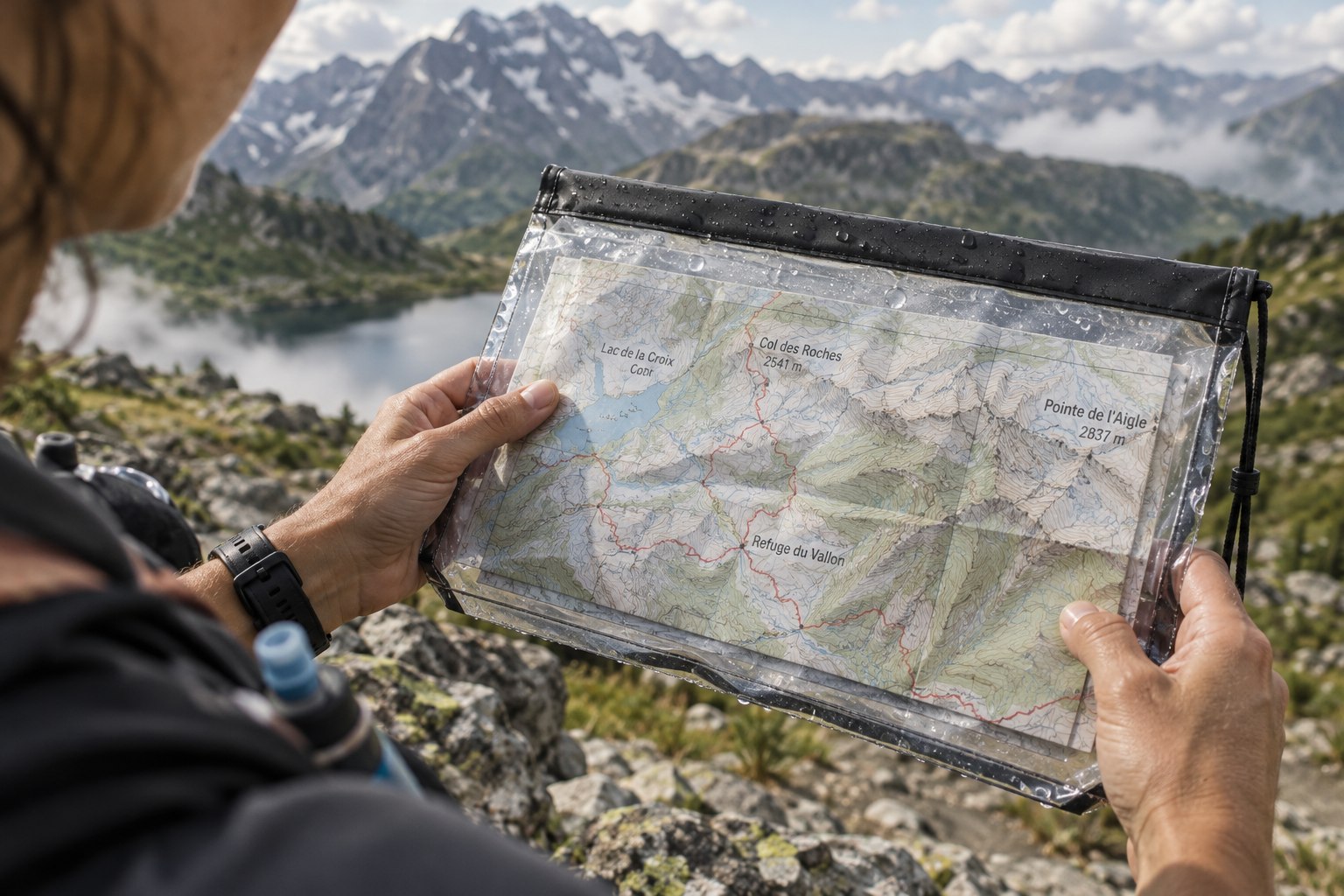
Choose a map case or closable protective bag large enough for the folded sheet. Check the closure carefully, including corners and any worn areas. A bag that keeps a snack separate from clothing is not automatically dependable rain protection. Follow the product’s instructions and do a simple trial with spare paper rather than risking your only map.
Check whether the material produces glare or makes small labels difficult to read. Open and close it with the gloves you expect to wear. If the closure is awkward, rearrange the map now rather than discovering that problem in wind. Keep the original protected while using a duplicate for handling practice when that is an option.
Do not attach the case with a long loose cord that can catch on branches or trail behind you. Choose a secure pocket or a short attachment intended for that use. The storage position should protect the map without forcing you to unload the entire vest. If it goes inside a waterproof compartment, confirm that wet kit placed beside it will not defeat the arrangement.
Use the paper before the phone fails
At a quiet checkpoint, compare the paper with the landscape and the digital map. Find the same junction and identify the direction you will take. This makes the paper familiar while conditions are easy. Waiting until a device has failed leaves two tasks at once: understanding the backup and recovering your position.
A paper map is not a replacement for knowing how to interpret terrain and direction. If the route requires navigation skills you have not learnt, choose a simpler outing or seek appropriate instruction. Carrying more information does not by itself make an unfamiliar, poorly marked route straightforward. Practise map use on a known local route where errors are easy to recognise and correct.
Reset it after the outing
Remove the map from its cover at home and check for moisture, worn folds and unreadable notes. Let the components dry before storing them. A damp sheet sealed in a bag is not ready for the next outing. Replace a damaged copy and retain the useful route observations somewhere separate, so updating the plan does not depend on deciphering a torn corner.
Before reusing the map, check current access and closures again. A dry, carefully folded sheet can still contain an outdated plan. Its value is as a readable reference for the landscape and the options you have checked, not as proof that every marked path remains available today.