Read the route as a whole
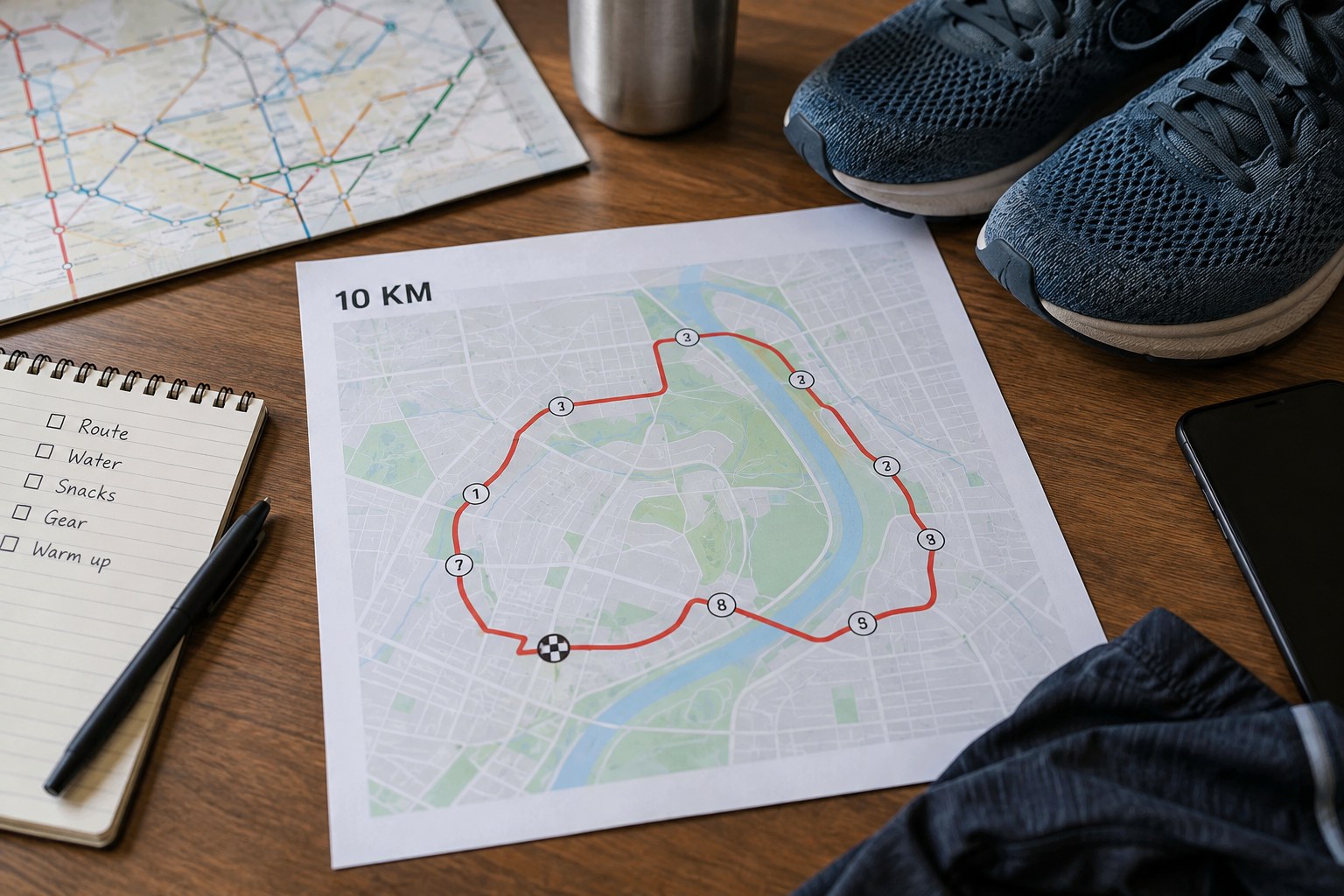
Start with the current map, elevation profile and terrain description. Identify whether the route is a loop or finishes elsewhere, where the main climbs sit and whether the organiser mentions technical or exposed sections. A short distance does not automatically mean an uncomplicated outing. Avoid comparing events solely by kilometres when the surfaces and height gain differ.
Look for a description that helps you relate the race to terrain you know. If the language is mainly promotional, seek more precise information from the organiser. Ask about a specific uncertainty, such as whether a section involves narrow rocky footing, rather than asking whether the race is easy. Easy depends on the person; a description of the ground is more useful.
Check how the course is communicated
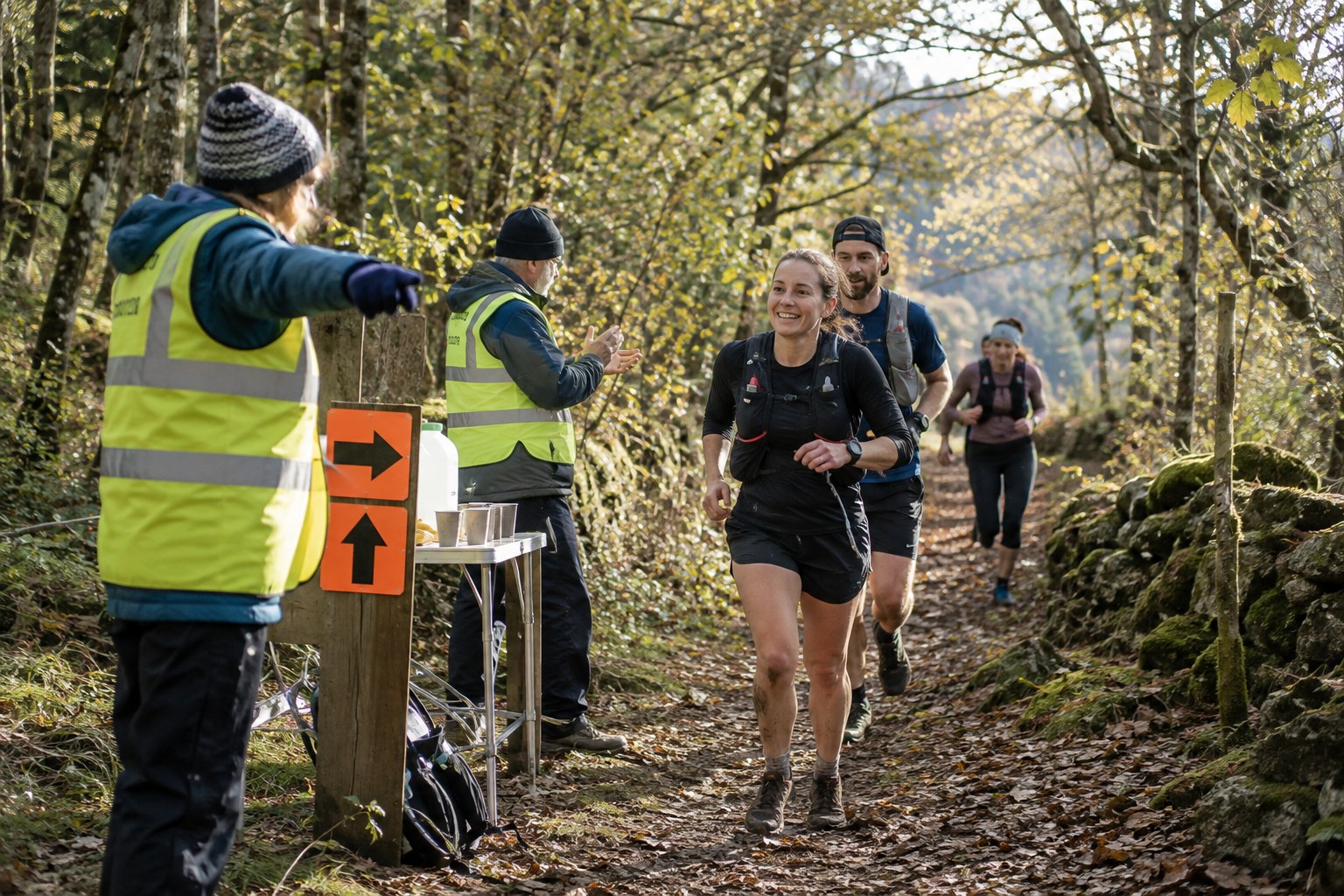
Read how route marking, checkpoints and any required navigation files are explained. Do not assume every junction will be staffed or that following other runners is an adequate plan. Find out what participants are expected to carry and know. If a GPX file is supplied, understand whether it is a supplement or part of the required navigation arrangement.
Check for a briefing and how changes are announced. A well-organised communication process lets you identify the final version of the route rather than collecting conflicting screenshots. Save the relevant instructions, but remain ready to follow official changes on the day. An event can need to alter a course for reasons that are not visible in an attractive advance map.
Distinguish support from convenience
List what is confirmed about aid stations, required containers, bag storage and transport. Separate those services from what you would merely like to have. An event described as supported can still require you to carry significant equipment or supplies between staffed points. Read the spacing and access arrangements instead of assuming that help or a refill is always nearby.
Mandatory kit deserves its own check. Compare the stated list with what you own and can use, including any conditional requirements. Buying an item does not automatically mean you can operate or carry it comfortably. Leave time for familiarisation on suitable local outings. If the required system is beyond your current experience, that is useful information when choosing the first event.
Understand stopping and returning
Read intermediate cut-offs, the final limit and the withdrawal procedure together. Find out how to report stopping and what the organiser says about return transport. A race that starts and finishes in different places needs an especially clear plan for the bag, supporters and journey home.
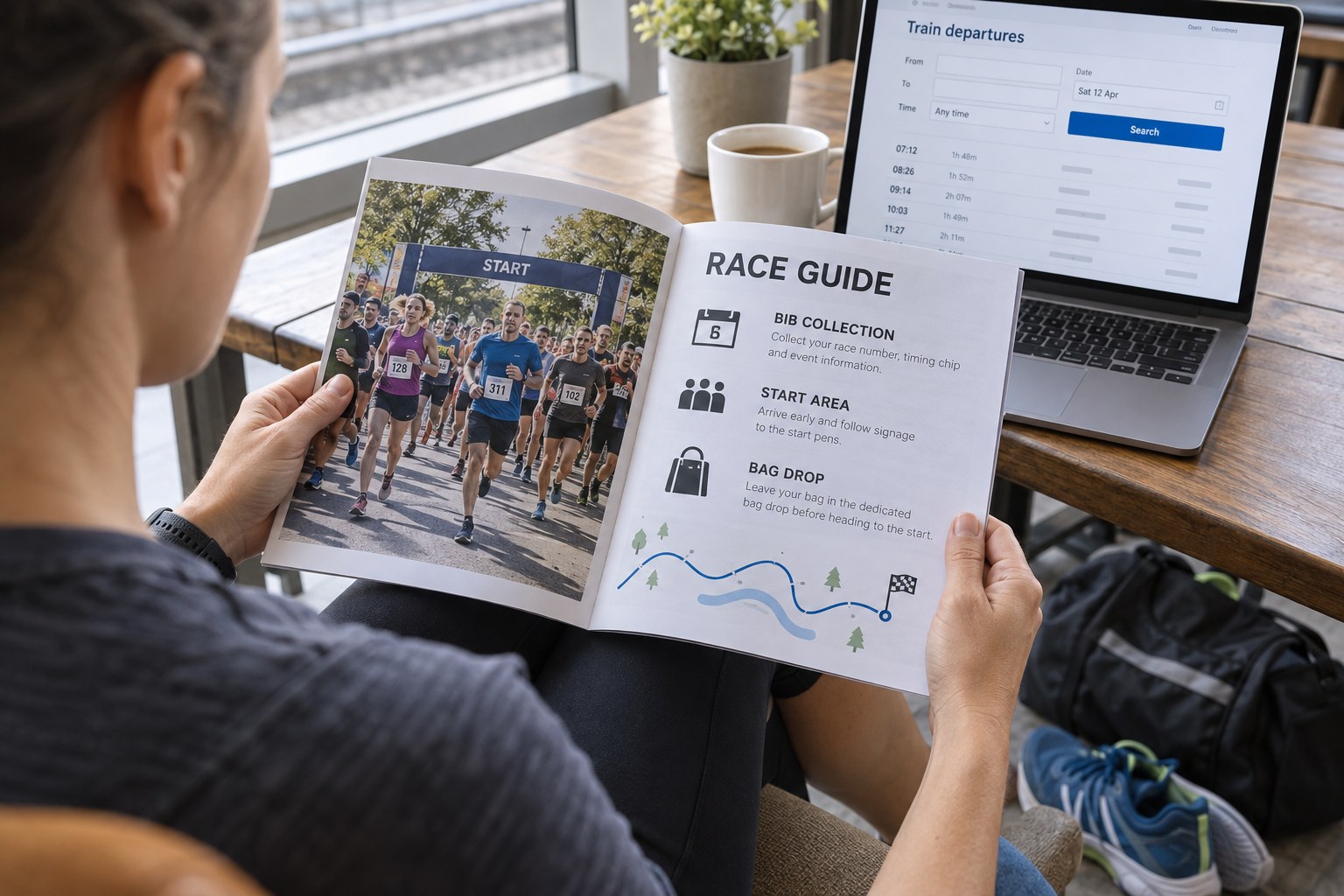
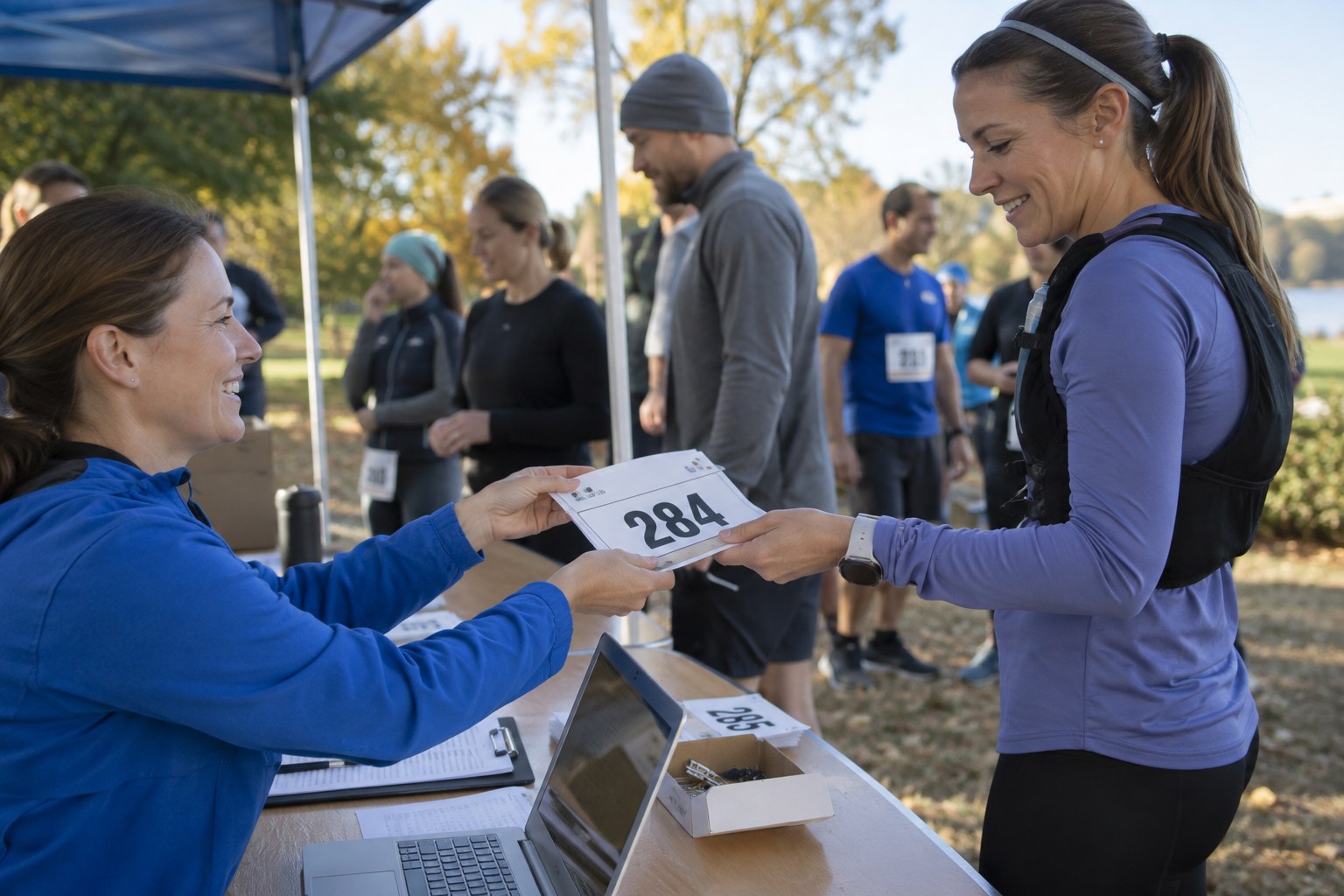
Consider the full day from leaving home to returning, including bib collection and waiting. A manageable running challenge can become an exhausting logistical puzzle if the start is difficult to reach or the return depends on an unrealistically tight connection. Choose arrangements you can carry out without assuming somebody will improvise a solution for you.
Choose an event you can explain to yourself
Before entering, summarise the choice in a few sentences: what the terrain is like, what you must carry, where support exists and how you leave the course if needed. If you cannot describe these points, identify the missing information. A clear answer is more valuable than reassurance drawn from somebody else’s finish photo.
Your first trail event does not have to represent the furthest distance you might complete. It can be an opportunity to learn the routines of a marked event on terrain reasonably close to your experience. Discuss individual training needs with a suitable coach if required, and choose the event on the basis of current preparation rather than a hoped-for transformation.
After selecting it, keep the official information in one place and check updates near the date. Tell any companion which version you are using. The aim is not to eliminate every uncertainty of an outdoor event; it is to make the avoidable organisational uncertainties small enough that you can pay attention to the trail itself.