Work backwards from the return
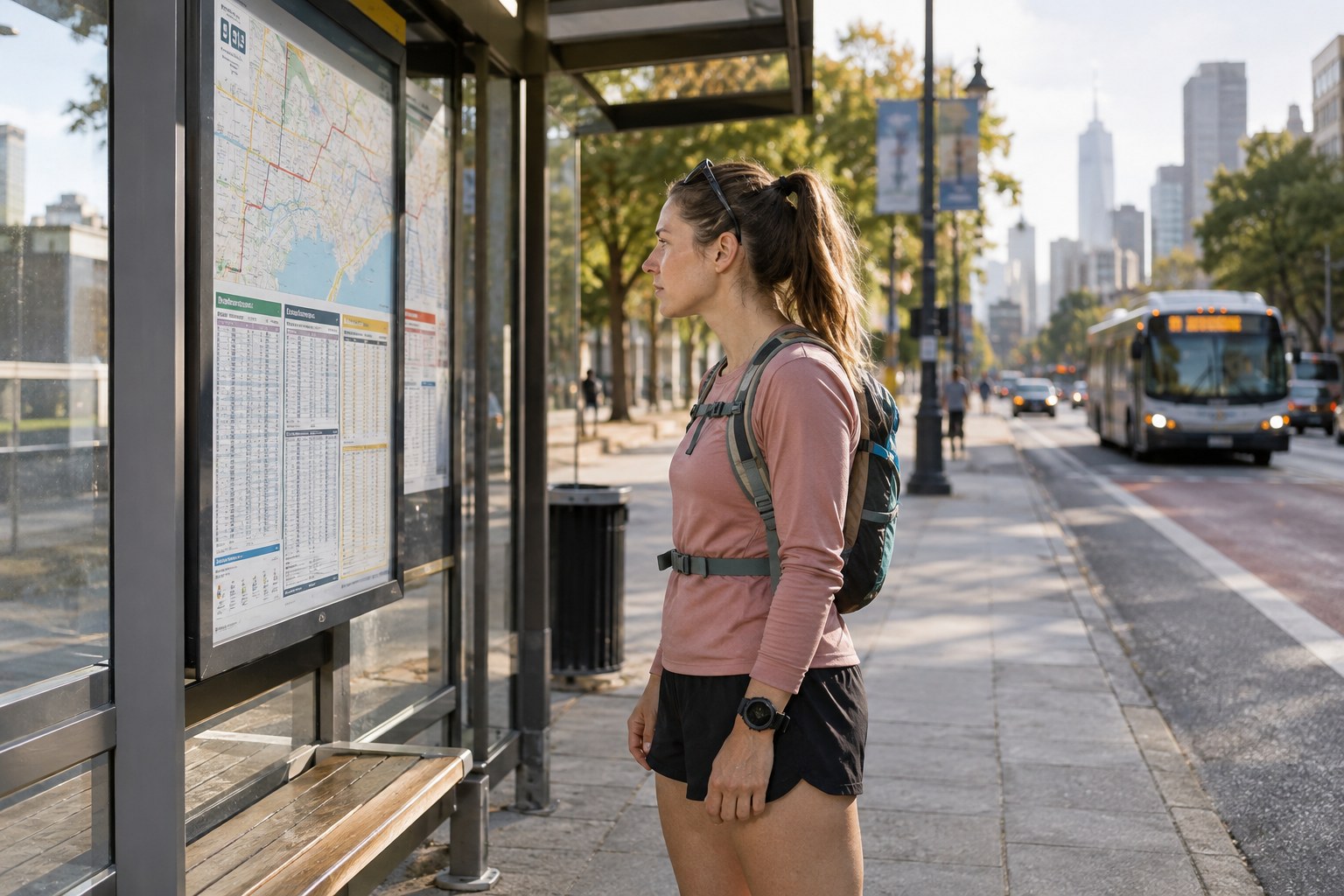
Choose the finish stop first and identify the services that can take you back on the intended date. A station name on the map establishes a location, not a useful departure time. Check the day of the week, direction and exact boarding point before drawing the running section between two transport symbols.
In Grand Est, the official Fluo journey planner and timetable pages provide a starting point for public transport research. TER Grand Est also publishes traffic information and works notices. Consult the relevant operator when a proposed journey depends on a particular service, and revisit the information close to departure.
Prefer a plan with more than one workable return. The last service of the day leaves little room for a wrong turn, slower ground or a missed connection. If only one departure makes the outing possible, shorten the running section or choose a loop from a more dependable starting point.
Calculate the time needed after the running endpoint. Reaching the edge of a station site is not the same as standing at the correct platform. Allow for the walk through the station, finding the stop, changing a wet layer and dealing with the ticket. A route that ends beside a transport icon can still involve an awkward final connection.
Build a margin you can actually use
Estimate running time from a comparable outing, then add separate allowances for navigation, pauses and the final walk. Do not hide all uncertainty inside a faster target pace. If the day runs late, the useful response is to shorten the route at a planned exit rather than turn the final section into a race against departure.
For example, you might plan to finish well before a preferred train and also identify a later acceptable return. Decide in advance what would make you use the later service and what would make you abandon the point-to-point plan entirely. The example is a planning method, not a suggested timetable or universal buffer.
Read connection details carefully. Similar stop names can refer to different sides of a road or separate locations. A replacement bus may not use the ordinary rail platform. Save the operator's relevant instructions, but remember that a screenshot records what was displayed when you saved it, not every later change.
Consider how waiting will feel after the run. Carry what you need to remain comfortable at the stop and keep the return ticket or payment method accessible. Do not make an open café, staffed building or charging socket essential unless you have confirmed that provision for the day.
Keep a simple recovery plan
Before leaving, agree on a meeting point if companions become separated and keep the important transport details available without relying on one person's phone. Share the actual intended finish with anyone expecting to meet you; the name of a nearby town may be too vague.
Check the departure information again on the morning of the outing. If disruption removes the useful return, change the route while you still have choices. A familiar local loop is a complete alternative, whereas continuing toward an unusable destination creates a transport problem at the end.
Afterwards, record the real time between finishing the run and reaching the boarding point. That observation can improve a future plan, but it does not validate future timetables. Keep personal route experience and current service information as two separate parts of the preparation.