Look beyond the first few stones
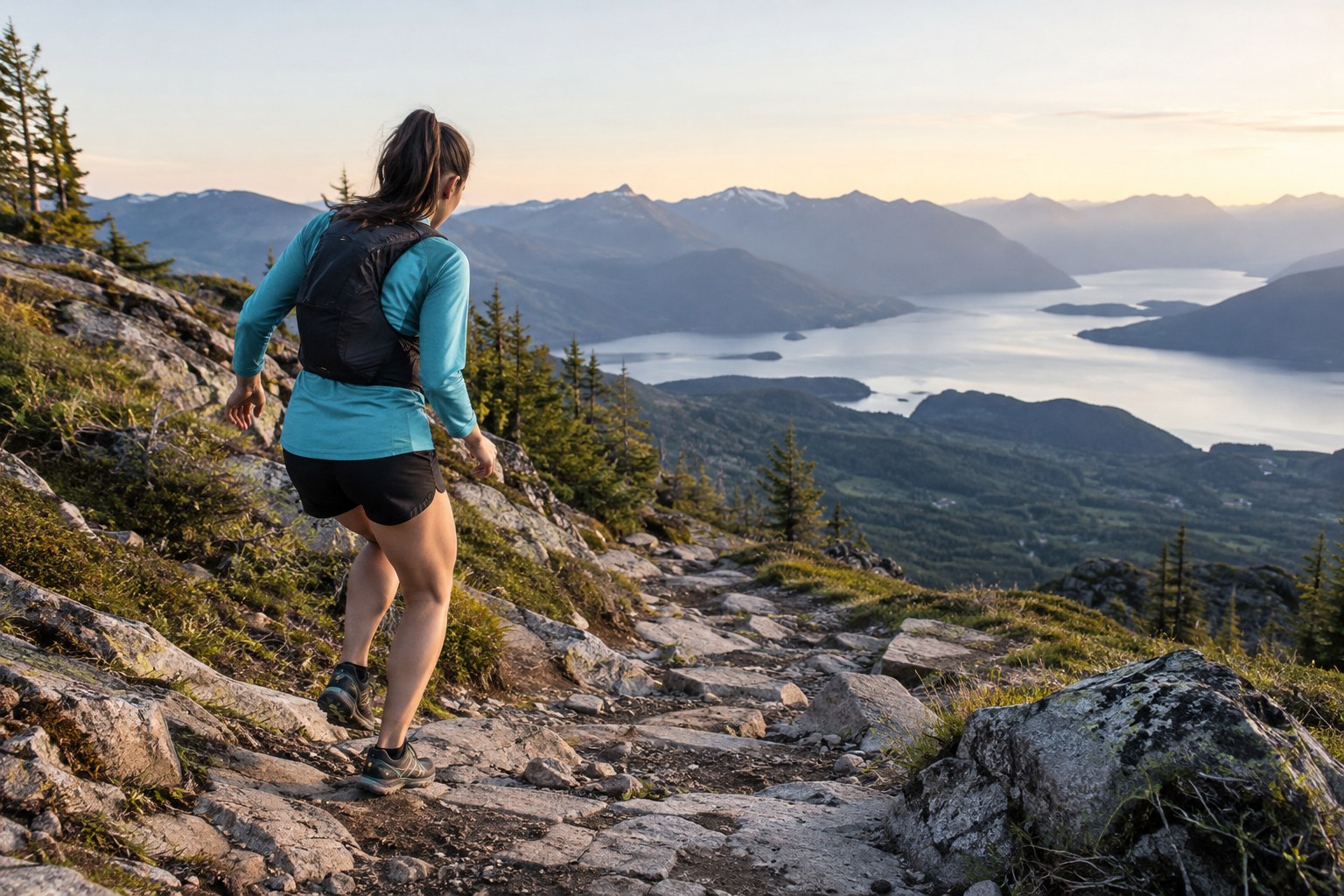
Before starting down, check where the rough section leads. Can you see a broad area where you could pause, or does it narrow around a corner? Notice steep edges, other users and places where the surface changes. A descent that looks manageable from the top may contain a section you cannot assess yet. Approach that uncertainty slowly.
Put away anything that occupies your hands or draws your eyes to a screen. Secure loose straps and check that your carried kit is settled. It is simpler to deal with a swinging flask on level ground than while negotiating rocks. If you need to read the route, do so before entering the descent rather than trying to combine navigation and difficult footing.
Give each decision some space
Walk if you cannot see a comfortable sequence of steps. There is no need to link the entire descent into one continuous run. Choose a pace that allows a change of mind before the next obstacle. Avoid launching across a gap simply because the runner ahead did so; their chosen line may not be appropriate for you.
Leave a gap behind another person so their body does not hide the ground. If someone faster approaches from behind, look for a genuinely wide, stable place to let them pass. Do not step towards an uncertain edge to make room. A brief conversation and a pause are preferable to both people improvising a pass on a narrow shelf.
Check again when the surface changes. Loose gravel between larger stones, wet slabs and steps built into the path require separate judgements. Familiarity with one part does not establish that the next part is equally straightforward. If the route becomes a scramble or requires skills you do not have, stop progressing and reassess the route while you still have a safe option.
Break a long descent into visible sections
Suppose the first part is a broad stone track but the next bend hides a narrow staircase. Do not let the comfortable opening establish your speed for the entire slope. Reach the transition slowly, find a stable place to look and decide again. You can walk the staircase and resume running only when the ground genuinely becomes suitable. This keeps each choice tied to what is visible rather than to a commitment made at the top.
If you need to stop, check the space behind as well as ahead. Move to a stable widening without stepping onto an uncertain edge, and tell a following companion. Avoid stopping immediately below a loose section where another person is still moving. Once everyone is settled, check whether continuing down is still the simplest route. A pause is useful when it restores information and options; it should not become a debate conducted while people remain balanced in an awkward place.
Keep the outing larger than this descent
A slow descent can affect the rest of the schedule. Recheck remaining daylight, the distance back and the group’s comfort rather than rushing to restore the original timing. Note the specific difficulty afterwards: hidden bends, unstable stones or a descent longer than expected. That helps you choose the next route and describe your preferences to a companion without reducing the experience to whether you were brave enough to run.