Record what you would otherwise forget
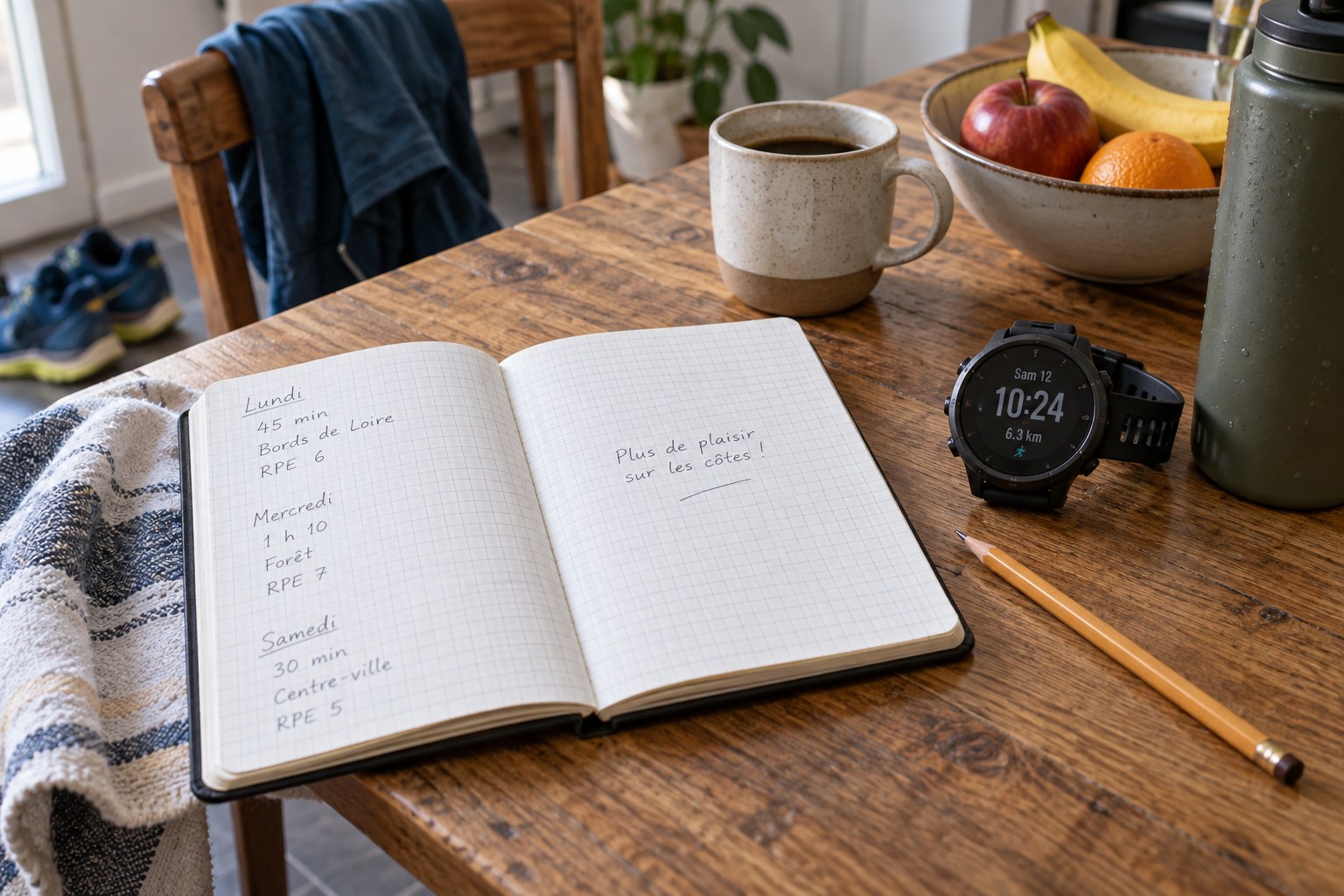
Begin with the date, the route and roughly how long you were out. Add a sentence about the purpose: an easy local circuit, an outing with a friend or a first attempt at a new path. The purpose gives the numbers context. Without it, a social run and a demanding solo session can look like competing entries in the same table.
Then record one observation that may change a future decision. Perhaps a crossing was busy, a pocket bounced or the return path was darker than expected. These details fade quickly and rarely appear in an automatic activity summary. They are particularly useful when you revisit a route after several weeks.
Separate observation from judgement
Write 'walked the final hill and finished comfortably' rather than 'bad run'. The first statement describes an event you can understand later; the second hides what happened. If you felt tired before leaving, note that separately from the route or weather. You do not need to diagnose the cause in the log.
Avoid assigning a score to every aspect of the outing. A simple description such as comfortable, uneven or more demanding than expected may be enough. Use the same meaning for those words over time, but do not turn a rough personal impression into a precise scientific measure.
Build an entry around one future decision
Suppose you are testing whether a run fits between finishing work and collecting a child. Record the whole time away, the departure delay and the point at which you returned, alongside the running activity. A log containing only moving time would miss the practical constraint you were testing.
The useful note might read: left ten minutes later than intended because the bag was not ready; shortened at the second entrance; returned with enough time to change. That observation suggests preparing the bag earlier or keeping the shorter route. It does not require a conclusion about fitness, discipline or the quality of the run.
For equipment, describe the conditions of the test. A pocket that worked with an empty soft flask may behave differently when you carry a full one and a phone. Note the contents and the specific issue, such as difficult access while stopped, rather than writing that the whole garment is good or bad.
Keep decisions in a separate line from observations when it helps. Observation: the return entrance was locked at this visit. Next action: check the published opening arrangements and choose another entrance if necessary. Separating the two stops a reasonable hypothesis from being remembered later as something you actually verified.
Leave blank fields blank if you do not know the answer. Reconstructing an effort score several days later merely to complete the record may create more certainty than memory supports. A short entry made promptly, with an honest gap, can remain useful.
Finally, decide what can be omitted. If you never use a field to make a decision and do not enjoy recording it, remove it. The notebook should reflect your questions, rather than become an unpaid administration task imposed by an elaborate template.
Make the record easy to maintain
Choose a notebook, a plain note or an app you already use. A format that works on a busy evening is more useful than an elaborate spreadsheet you abandon. If an app already stores distance and time, your manual entry can focus on context rather than copying those fields.
Review several entries together when deciding what to change. One awkward outing may reflect a blocked path or a rushed departure, while a repeated problem deserves closer attention. Look for actions you can take: choose another meeting place, test a different pocket or allow more time. Keep private details private, particularly precise home locations or personal health information. A log should help you understand your running, not create pressure to publish every observation.