Learn the connection from the door
Before running, identify how to reach a suitable path from where you are staying. Check the return entrance as well; a hotel or apartment building can have several doors with different access arrangements. Keep the address and a way to contact your accommodation available without relying on memory.
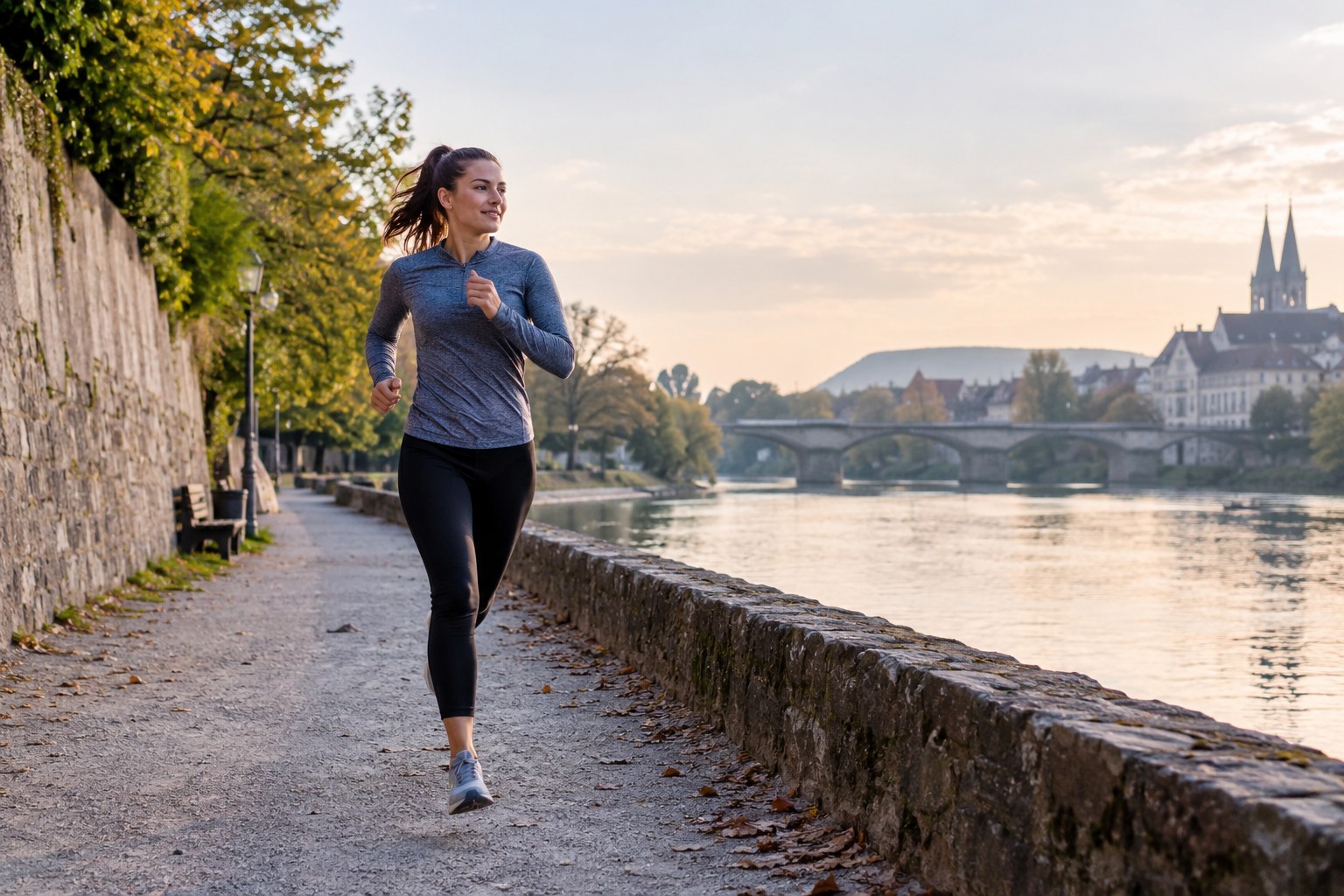
Choose a short, understandable route with clear exits. Do not use the first outing to connect every landmark on a tourist map. A familiar-looking riverside path may still have stairs, closures or a long stretch without an easy return.
Look at current local conditions and access information. If the area has hazards or requirements you do not understand, seek reliable local guidance or choose a simpler location. Treat the setting as new even if the distance resembles a route at home.
Use effort to preserve attention
Begin at an effort that leaves room to read signs, notice traffic and make route decisions. If you repeatedly need to stop to understand the next turn, accept those stops rather than accelerating between them to rescue the average.
Allow hills, wind or a different surface to change the pace. Your usual number belongs to a particular context, not every destination. A travel day or unfamiliar routine can also affect the experience; record that context without inventing a precise explanation.
Do not compare the outing with a local runner passing you. They may know the ground and have a different purpose. Following them can lead you away from the route you understand without making the outing more appropriate.
Finish with information for the next visit
Return while the route still feels manageable and note what you learned: a useful crossing, a quieter entrance or a section to avoid at a busy time. Save those details with the date because access can change.
If you plan another run, build from the parts you have actually seen rather than making a large extension from a single successful outing. Keep the same ability to turn back or shorten.
The first run can be successful simply because it helped you understand the neighbourhood and return comfortably. You do not need to produce a representative fitness result while also learning how an unfamiliar place works.