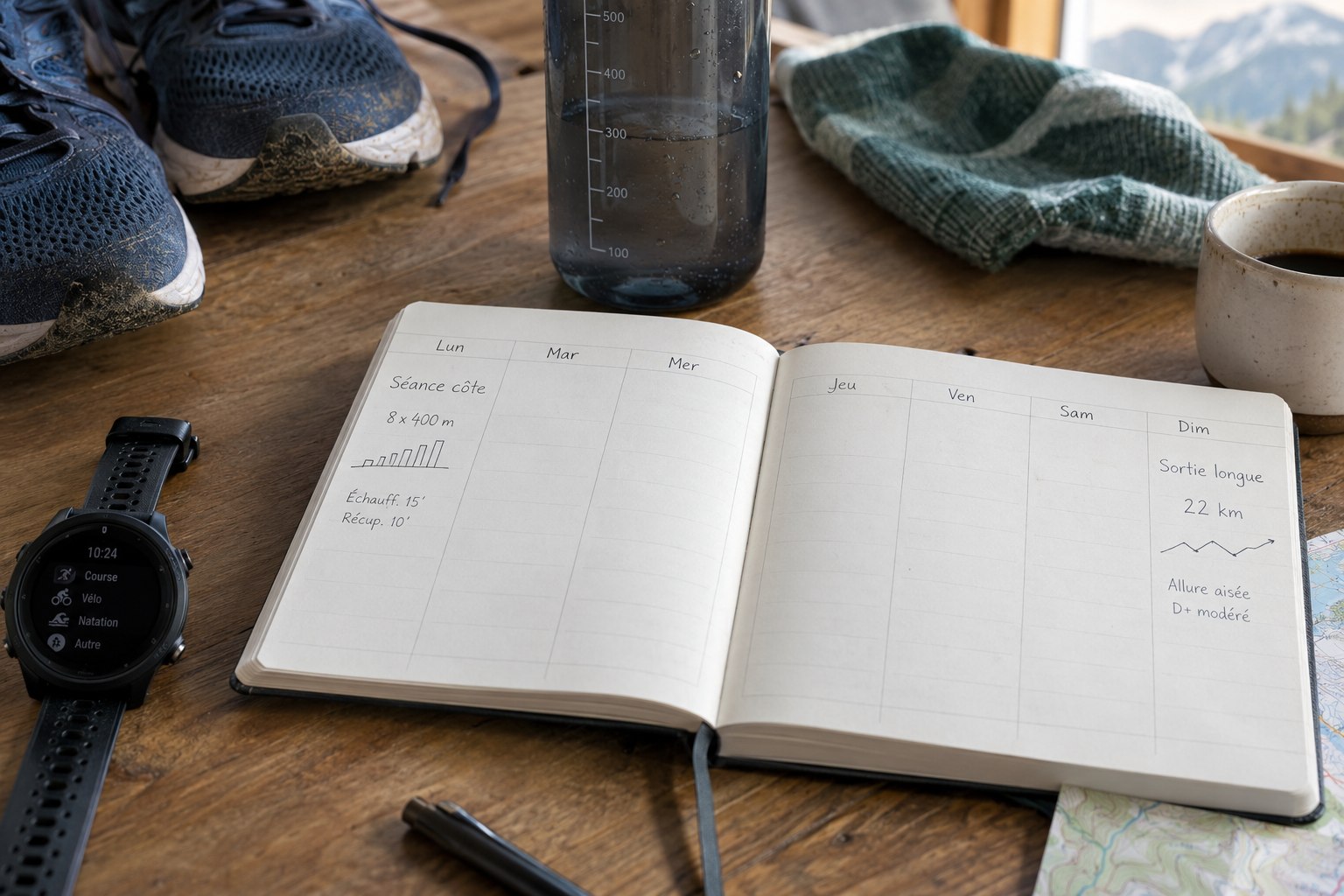
Choose a purpose you can recognise
You might want a familiar outing between busier days, time outside after work or a chance to try a pocket arrangement. Keep the purpose specific enough to guide a choice. 'Run better' is vague; 'stay comfortable on the local loop and return unhurried' tells you something about pace, route and timing.
Avoid loading several experiments into the same outing. Testing new shoes, a new vest and an unfamiliar trail at once makes it difficult to interpret discomfort or distraction. If the purpose is an equipment check, stay near a straightforward finish and change only the item you want to understand.
A social purpose is also legitimate. When conversation is the point, choose a path with enough room and agree an effort that suits everyone. Do not quietly turn the final section into a race because the earlier part felt undemanding.
Remove targets that compete with the purpose
Choose the watch information you actually need. A return deadline may make elapsed time useful, while live pace can invite unnecessary corrections. If an app announces every split, decide whether those announcements help this outing. Turning them off is a practical choice, not an attempt to hide the result.
Pick a route that allows the intended effort. A steep finish, crowded stretch or frequent traffic crossings may be manageable, but each adds decisions. Walking a hill or stopping at a crossing can preserve the purpose more effectively than trying to maintain an uninterrupted record.
At the end, ask whether the outing did its job. Did you finish with the time you needed? Did the pocket stay secure? Was the conversation comfortable? Record that result before judging the average pace. If the run repeatedly becomes more demanding than intended, change the setup: a flatter route, different company or less prominent watch feedback may help. The label in a calendar only becomes meaningful when your choices during the outing match it.