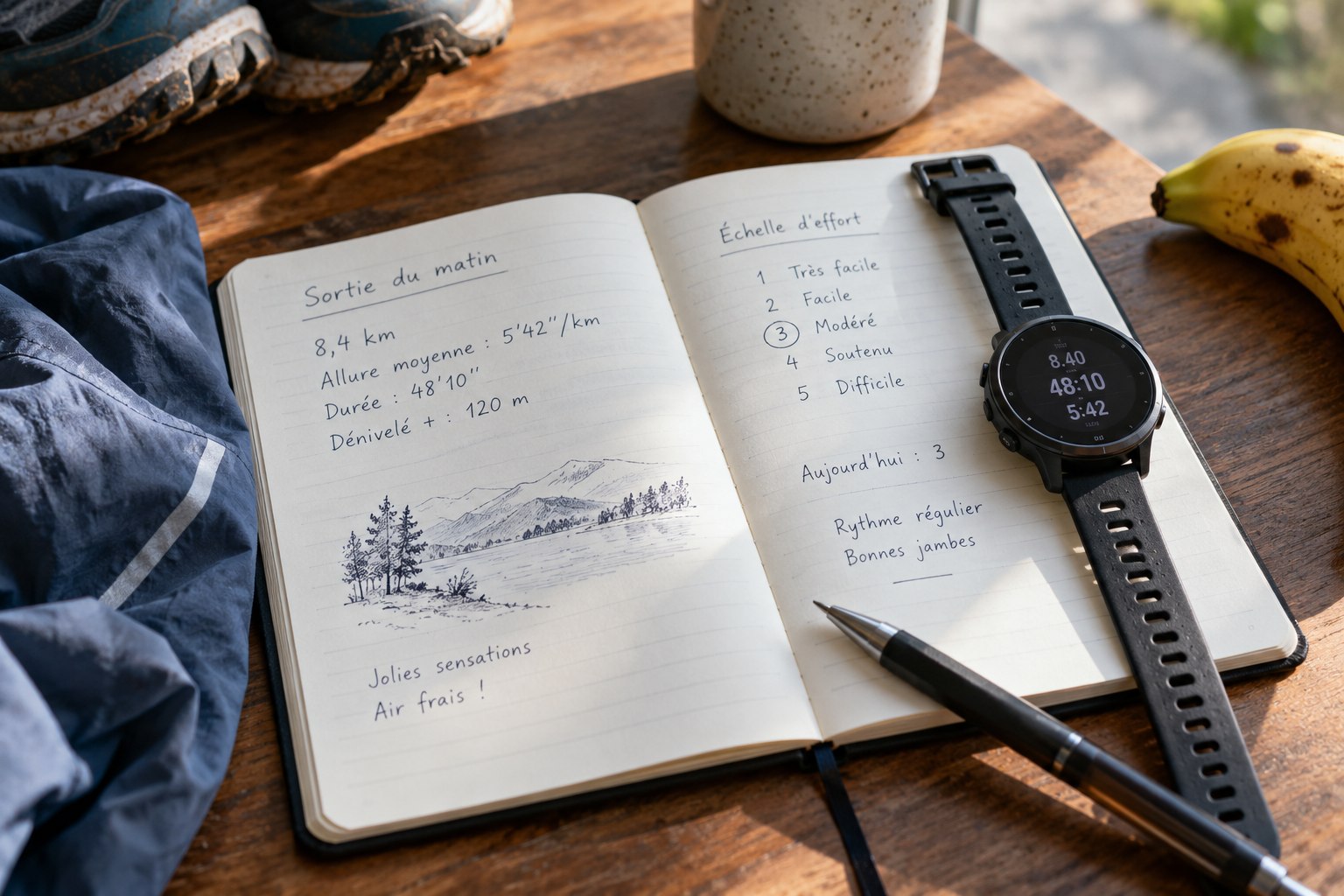
Choose a scale you understand
The CDC describes relative intensity using a zero-to-ten effort scale, from sitting to maximal effort. If you use a scale supplied by a coach or another system, keep its definitions instead of mixing numbers from different scales. A rating of six has little meaning without knowing the scale behind it.
You can also begin with words such as comfortable, moderate or demanding, provided you use them consistently enough to compare your own notes. Do not turn another runner's description into your target. The point is to capture your experience rather than match someone else's score.
Decide whether you are describing the whole outing or a particular part. A final hard hill can dominate the memory of an otherwise easy route. If useful, write one overall description and a separate note about that section.
Record the impression before the summary changes it
Make the effort note soon after the outing, before studying the pace graph in detail. Otherwise an unexpectedly slow number may lead you to rewrite a comfortable experience as a poor one, or a fast number may make you minimise how demanding it felt.
Add brief context: wind, heat, hills, interruptions or a rushed start. You do not need to explain every sensation or diagnose its cause. A useful entry might say that the same route felt more demanding in the exposed section, with the reason left uncertain.
Keep discomfort or unusual symptoms separate from an effort rating. A single number should not hide a concern that needs attention. Describe the issue plainly and seek appropriate advice when necessary.
Preserve the disagreement between two measures
Imagine that you describe an outing as comfortable before opening the activity summary, then discover that its average pace was slower than expected. Keep both observations. First check whether the route, stops or display settings explain the numerical difference; do not immediately revise the effort note to make the record look coherent.
The opposite mismatch is useful too. A quicker result accompanied by a much more demanding experience is not the same observation as moving quicker while the outing still feels ordinary. Your note helps preserve that distinction without requiring a conclusion about why it happened.
When using a numerical scale, write down its meaning somewhere you can refer to. If you later switch to words or adopt a coach's different scale, mark the change in the log. Old and new entries can remain useful, but treating unlike rating systems as one continuous sequence creates a comparison you did not actually make.
If one portion dominated the experience, add its location and duration in ordinary terms rather than assigning several retrospective scores. For example, record that the exposed return felt demanding while the sheltered outward section felt comfortable. That description gives a future reader more context than a single unexplained number.
Review the notes with a specific question: does this route still suit an easy outing at this time of day, or does the schedule repeatedly make the start rushed? The effort record should inform such choices, rather than become another target you feel obliged to satisfy.
Use the pair to ask a better question
When reviewing, look for changes in the relationship between pace and experience on reasonably comparable outings. Ask whether the route, conditions or schedule changed before drawing conclusions about fitness. One difference is an observation, not a diagnosis.
If a coach uses your log, provide the actual rating and the context rather than adjusting it to look consistent. The usefulness comes from honest information. Avoid decimal precision or elaborate calculations unless there is a clear reason to use them.
An effort note should take seconds, not become a new burden after every run. Keep the method simple enough to continue, and review it only when it helps a decision about the next outing or the broader schedule.