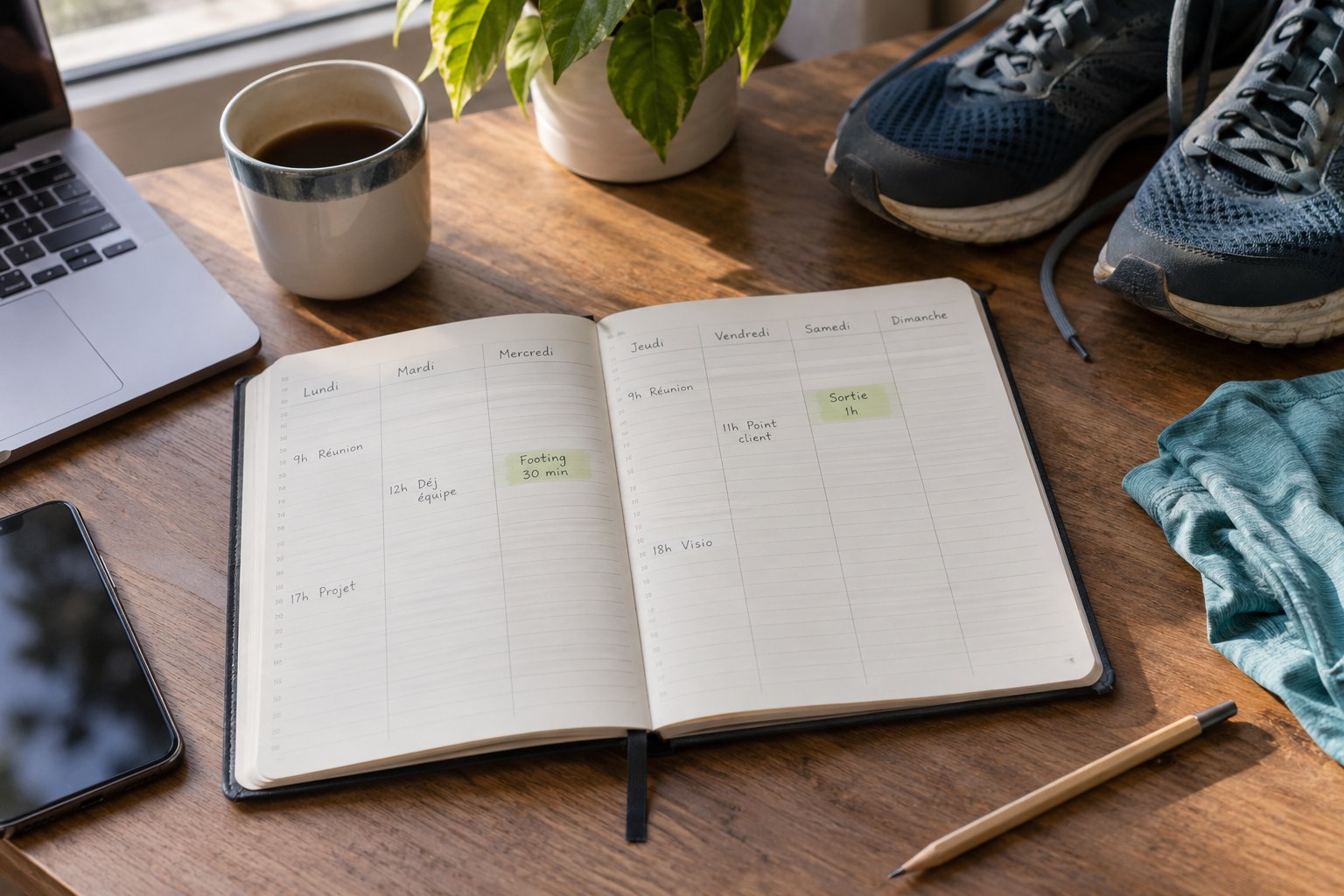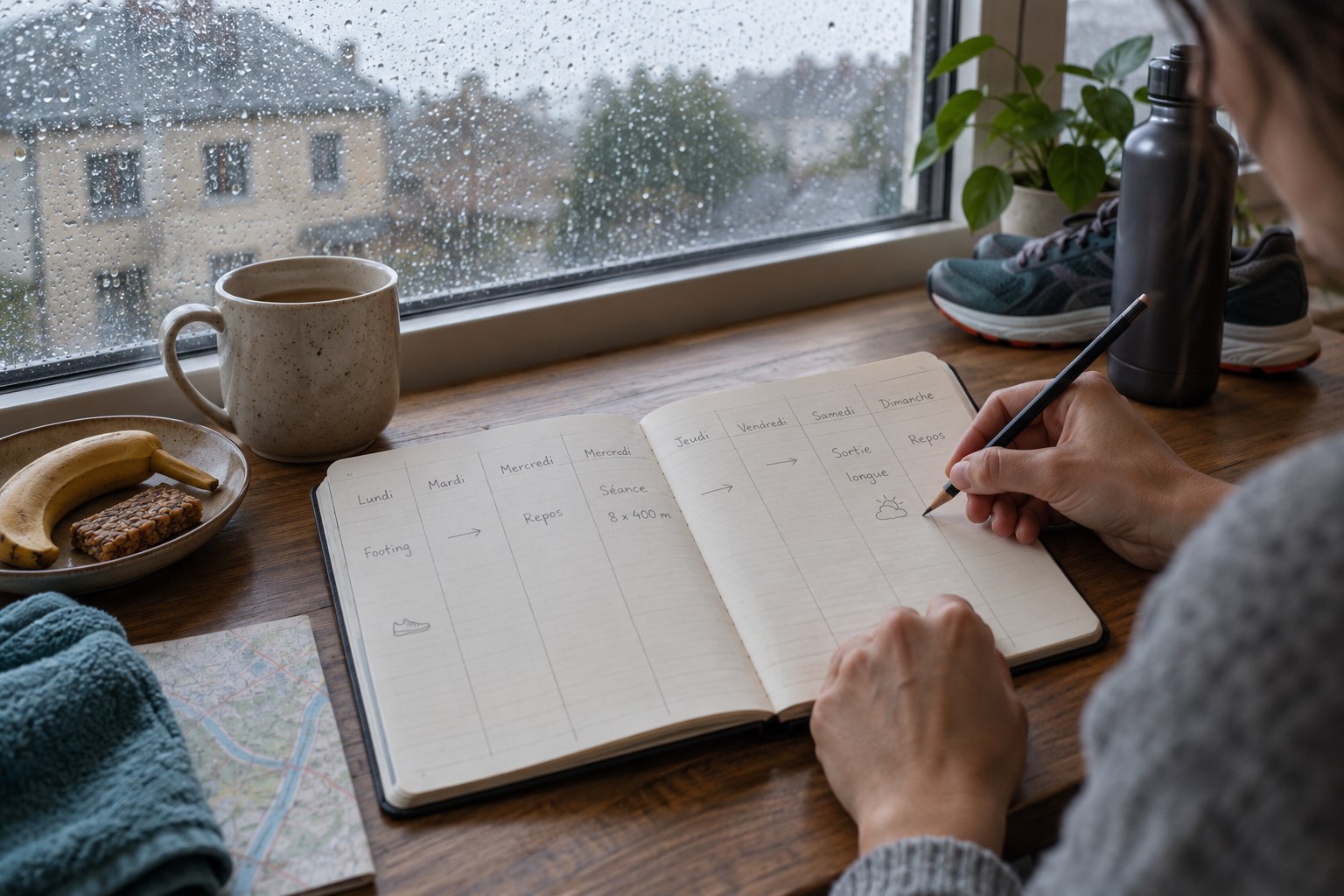
Decide whether the session needs to move at all
A cancelled outing may simply be omitted. That is different from abandoning the broader plan. Ask what role it had and whether preserving it is important enough to change other commitments. If you follow a coach's programme, report the cancellation and the remaining availability clearly.
Do not make the replacement harder because the original session did not happen. The weather has removed an opportunity, not created a training debt. A shorter or easier alternative may fit the day, but it should have a clear reason rather than serve as punishment for staying indoors.
Separate inconvenience from unsafe conditions. A wet familiar path and a dangerous weather warning do not call for the same response. Check the appropriate current official information, and do not use a backup route to work around a warning that applies to the whole area.
Inspect the days on both sides of a new slot
Moving a session changes its neighbours. A demanding outing moved from Tuesday to Thursday may now sit beside another demanding day or a long journey. Look at the whole sequence before deciding that Thursday is available.
Include the time around each activity. An indoor alternative might require booking, travel and changing, even when the exercise itself is short. A later outdoor start may affect daylight and the return. The calendar should reflect the actual absence, not only the recorded movement.
If the replacement only fits by removing preparation or rushing the finish, it may not be an equivalent option. Change the task or leave it out rather than preserving the name while changing all the conditions that made it appropriate.
For example, imagine a planned outdoor session is cancelled on Wednesday and the next reliable window is Friday. Before moving it, look at Saturday's commitments and the purpose of Sunday's outing. Keeping Friday easy and omitting Wednesday may be more coherent than preserving every original session. If a coach is involved, present that sequence and the available choices rather than asking an abstract question about whether you can make up the run.
Keep the decision deadline practical. If an indoor booking must be made by the previous evening, decide then using the information available and recheck any relevant warning before travelling. Avoid reserving several alternatives that you cannot reasonably use or leaving companions uncertain about where to meet. The replacement plan should reduce confusion for everyone involved.
Use indoor options honestly
A treadmill, indoor track or another activity can provide an alternative when it fits your experience and programme. It does not automatically reproduce a technical trail, a long descent or a specific outdoor session. Describe what you actually do and keep the limits clear.
Check facility access before relying on it. Opening hours, booking rules and equipment availability can make a theoretical alternative unusable. Have a simple fallback that does not require you to arrive and improvise an unfamiliar workout.
If you need guidance on adapting a prescribed session, ask the coach responsible. Avoid converting every missed kilometre into another activity by an invented formula. The aim is a suitable decision, not an exact arithmetic replacement.
Keep the next suitable day suitable
A clear forecast after several cancelled days can create pressure to do everything at once. Choose the outing that fits the current situation and leave the backlog behind. More available daylight does not mean more available recovery or fewer family commitments.
Recheck the route after the weather event. An improved forecast does not establish that a flooded, obstructed or damaged path has reopened. Use local access information and what you can safely observe on the ground.
Update the calendar so it distinguishes the planned, cancelled and completed activities. That makes a later review easier and prevents a moved session from appearing twice. If the same weather regularly disrupts a particular slot or route, build a more reliable seasonal arrangement rather than repeatedly improvising the same solution.
Finish the review with one decision about the next outing. You do not need to redesign the entire month every time conditions change. A flexible plan keeps the purpose visible while allowing an ordinary week to remain workable.