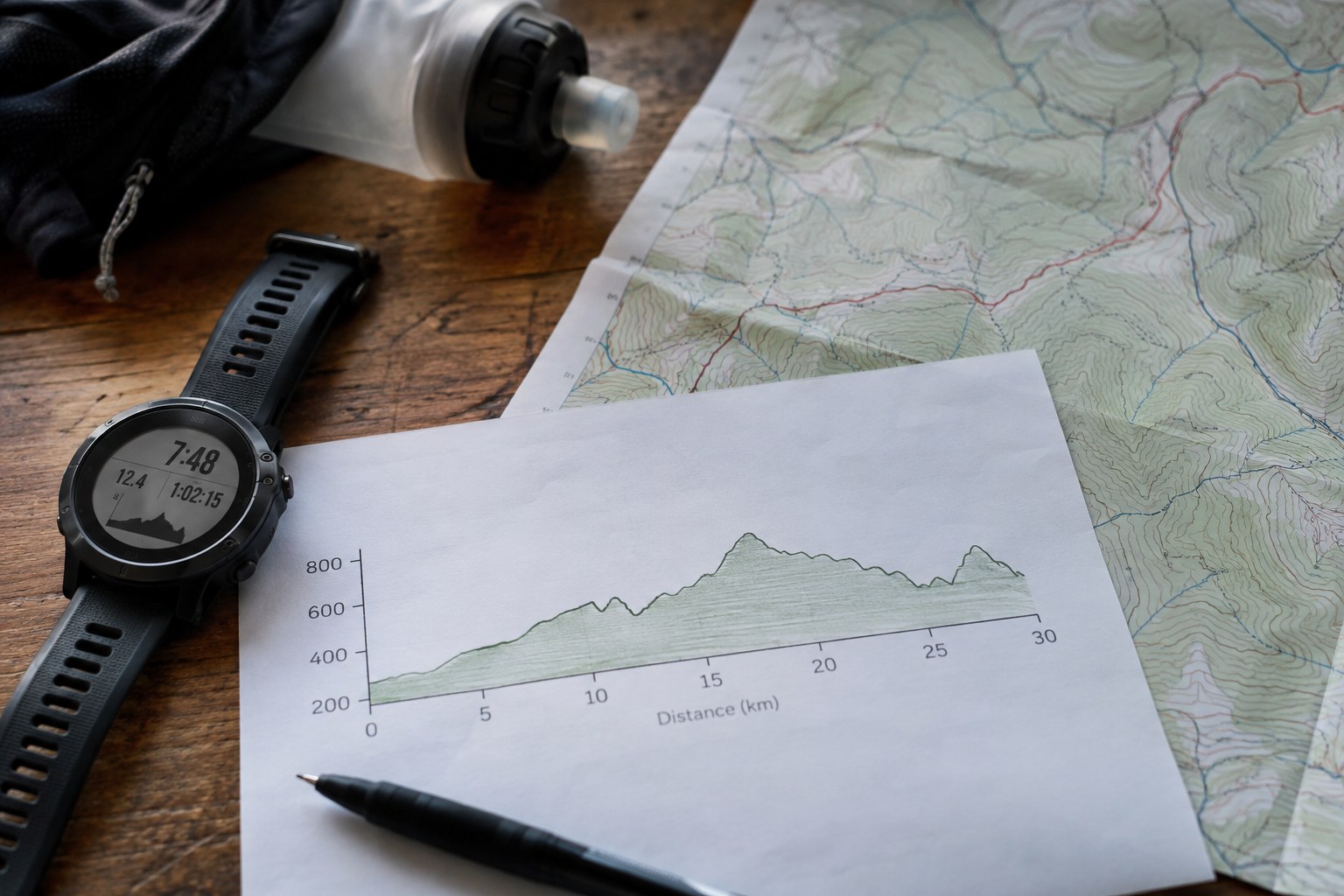
Read the profile beside the total
Two routes can report the same gain while arranging it differently. One may have a sustained climb followed by a long descent; another may scatter short rises throughout. Look at where the climbing occurs relative to the start and finish, not just the total beside the route name.
Check the horizontal scale of the profile. A chart squeezed into a small screen can make a modest rise look dramatic or a long climb look brief. Read the distance markers and route map together before interpreting the image.
Include the surface and access. A smooth climb with clear footing differs from an uneven path at the same gradient. Steps, gates and crowded sections can change the experience without contributing much to the elevation total. The number is one part of a route description, not a complete difficulty rating.
Understand where the measurement came from
A route planner, recorded watch activity and corrected online summary may not use the same source of elevation information. Before comparing totals, check which record you are viewing and whether any correction has been applied.
Garmin explains that some devices estimate altitude with a barometric altimeter using air-pressure changes. Its support information also notes that pressure can change for reasons other than climbing. That is a reason to understand the device and its calibration, not to assume every unusual total is a weather error.
Follow the manufacturer's instructions if the reading repeatedly seems implausible. Do not poke at a sensor opening or change unfamiliar settings based on a guess. Record any calibration or processing change so that later comparisons do not silently mix different methods.
Avoid converting uncertainty into a target
If two devices disagree about a familiar loop, do not add another hill simply to make one display reach the expected total. The route you ran has not changed because the summaries differ. Look at the record and context afterwards instead of adjusting the outing to repair the statistic.
Be cautious with very small differences between visits. The apparent precision of a number does not establish that a few metres of difference represent a meaningful change in the route or your performance. Use the same method for a comparison where possible and keep its limitations visible.
For an event, consult the organiser's current route information. An old participant file may use a different course or recording method. Treat the official profile as planning information and still check surface, distance and the organisation of the day.
Keep notes that the total cannot provide
Write down the climb that required a change of approach, the descent that demanded attention or the place where the route became less obvious. Those details help you prepare for a return visit more directly than a single accumulated number.
When choosing between routes, ask which pattern suits the outing you intend. A smaller total with awkward footing may be less appropriate than a larger total on familiar ground. Elevation gain is most useful when it prompts those questions, rather than when it becomes a ranking of which route or runner worked hardest.