Make the sequence visible
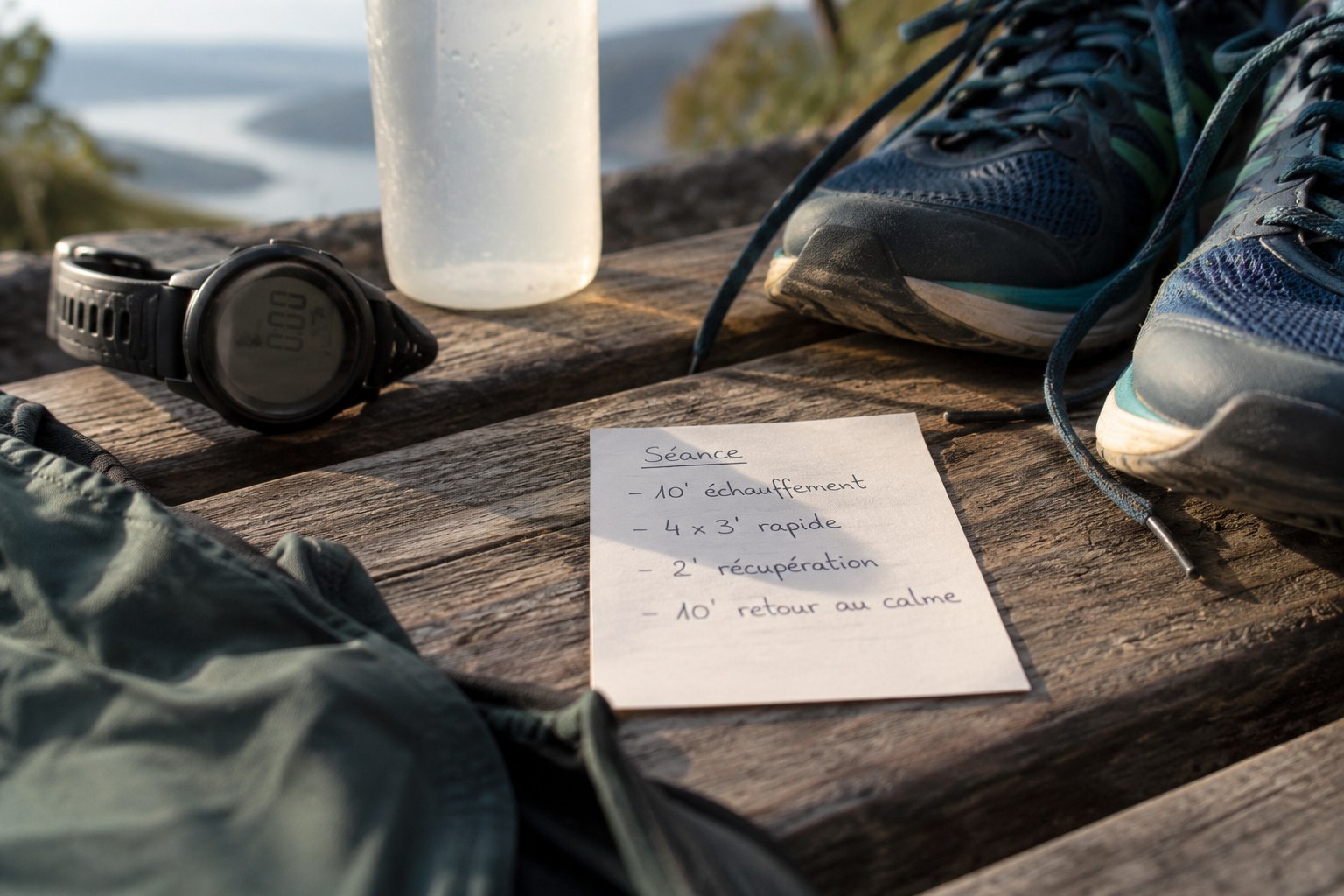
Separate the beginning, the main work and the finish. If a coach has supplied the session, preserve the meaning and ask about unfamiliar shorthand before copying it. Do not simplify an instruction so far that you remove the recovery period or confuse the number of sets with the number of repetitions.
Write units beside every number that could be ambiguous. Metres, minutes and repetitions should not depend on your memory of a conversation. Keep the intended effort separate from the duration so that one does not get mistaken for the other.
Include the start and finish locations when the route matters. A short description such as the open section beyond the park entrance can be easier to use than a coordinate. If the card is for a track session, add the relevant venue arrangement you need to remember, without treating the card as a substitute for current local instructions.
Keep the layout simple enough to read when stationary outdoors. Large text and a few clear lines are more useful than squeezing a full training explanation onto a tiny piece of paper. Test the card before the session: can you describe the sequence back without guessing?
Prepare for an imperfect day
Add a short note about the acceptable alternative if the planned section is unavailable. This might mean using a known route or checking with the coach; it should not be a newly invented workout hidden in the margin. A card can remind you to reassess without prescribing every possible response.
Carry it where it stays readable and accessible. A paper note may need protection from moisture, while a phone note requires battery and a safe place to stop. Do not read either while negotiating traffic or an uneven path.
Afterwards, record what actually happened separately from the original card. Mark a missed repetition or changed route honestly rather than editing the plan until it appears perfectly completed. Keep the useful version for another appropriate session, but check the instructions again before reusing it. The card is a memory aid for a particular task, not a permanent programme that automatically suits every future day.