Work from the last usable section
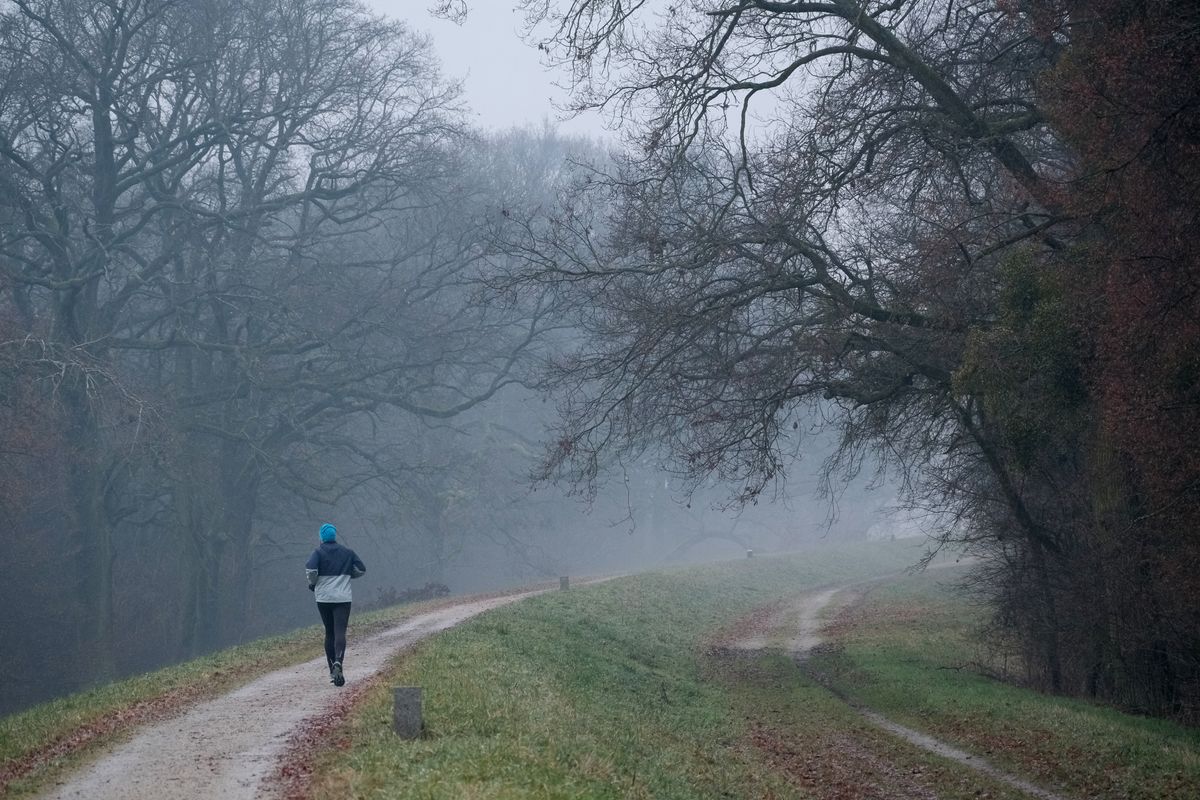
Identify the part of the route that depends most on daylight: an unlit park, uneven path or unfamiliar junction. Plan to leave that section with time in hand. Do not use the published sunset time as a promise that every surface will remain equally visible until that minute; buildings, trees and cloud can change what you can see.
Keep the return on a route you understand. If you start late, shorten the outward section rather than hoping to make up time later. A familiar circuit close to home can offer several chances to finish, whereas a long outward run commits you to the same return even after the light changes.
Separate seeing from being seen
Light that helps you recognise the ground and clothing that helps someone notice you have different jobs. Check both. A bright shopfront behind you does not necessarily illuminate the path ahead, and a headlamp does not remove the need to consider traffic and crossings.
If you intend to use a lamp, try its controls and fit before the outing. Check the charge and the instructions for the setting you will use. Do not discover at the far end of the route that the longest advertised runtime applies to a mode too dim for your intended movement. Choose a familiar setting and keep the first test close to an easy finish.
Make a late-start version
Write down a simpler alternative before you need it. It could be a shorter lit circuit, a walk, or postponing the outing. The alternative should be a genuine option, not the original route with a promise to hurry. If the route becomes difficult to read, stop in a safe place to reassess rather than continuing while looking at a screen.
Consider the whole absence from home. Changing clothes, finding keys and reaching the start all consume the same daylight window. Preparing those details can help, but it cannot turn an unsuitable route into a suitable one.
After a trial, note where visibility changed and which junctions were harder to recognise. Those observations are specific to that visit; they do not guarantee the same conditions next time. Keep checking the actual route and weather instead of treating a successful first evening as permanent approval.