Divide the load by where it is needed
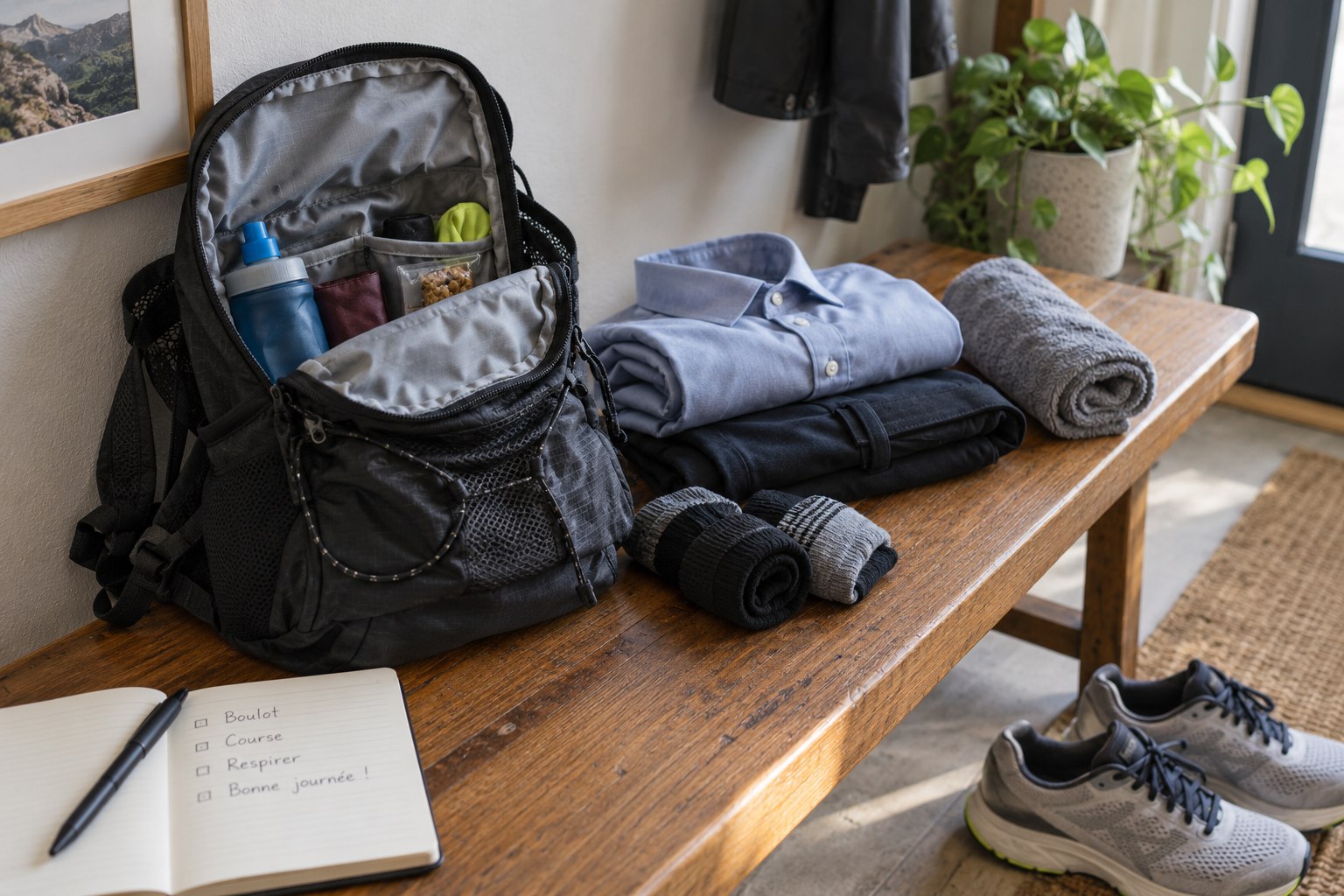
Make three groups: items needed during the run, items needed immediately afterwards and items that can already be waiting at the destination. Keys and a travel pass may need to stay with you. A spare pair of work shoes may be easier to leave at work. Check storage arrangements before relying on that option.
Consider both directions of the journey. If you run to work and travel home another way, you still need a suitable outer layer and the correct ticket or payment method. If you only run home, decide how the morning's shoes and clothing will return. Otherwise a series of apparently light journeys can leave all your belongings at one end.
Protect the dry set
Place the change of clothes in a separate closed liner or bag inside the pack. Do not assume the outer fabric or a water-resistant zip will keep everything dry in prolonged rain. Keep a clean shirt away from wet shoes, a used towel and any bottle that might leak.
Pack according to how the clothes will be worn. Put easily creased items flat where possible and avoid placing hard objects directly against them. A small toiletries set can stay at the destination if permitted, reducing repeated packing. Check whether there is actually somewhere to wash and change; a toilet cubicle and a full changing room offer different possibilities.
Think about the first item you will need on arrival. If that is an access card, place it where you can retrieve it without emptying the pack in a doorway. If it is a dry layer while waiting for a shower, keep it near the top.
Test the loaded arrangement locally
Try the pack with the intended clothing and load before committing to the full commute. Walk and jog a short, familiar section. Notice movement, pressure and whether a bottle or shoe shifts as the bag settles. Repack before tightening every strap; an awkwardly placed object may be the real problem.
A laptop or fragile device adds a different constraint. Check your workplace's transport expectations and the pack's protection. Do not assume a sleeve makes an electronic device suitable for repeated movement or wet conditions. If the load cannot be carried comfortably and appropriately, transport it separately or choose another running arrangement.
Create the return system
Carry a separate bag for used clothing and arrange to remove it promptly rather than leaving it sealed and forgotten. Keep a short list of the items that must be replenished: socks, towel, clean top and travel essentials. The list should prevent a missing work item, not turn the commute into an expedition.
For the first attempt, use a day with some margin at the destination. Record what you did not need and what you wished you had left there. The most useful improvement may be reducing the transported load, rather than buying a larger pack to carry the entire wardrobe every time.