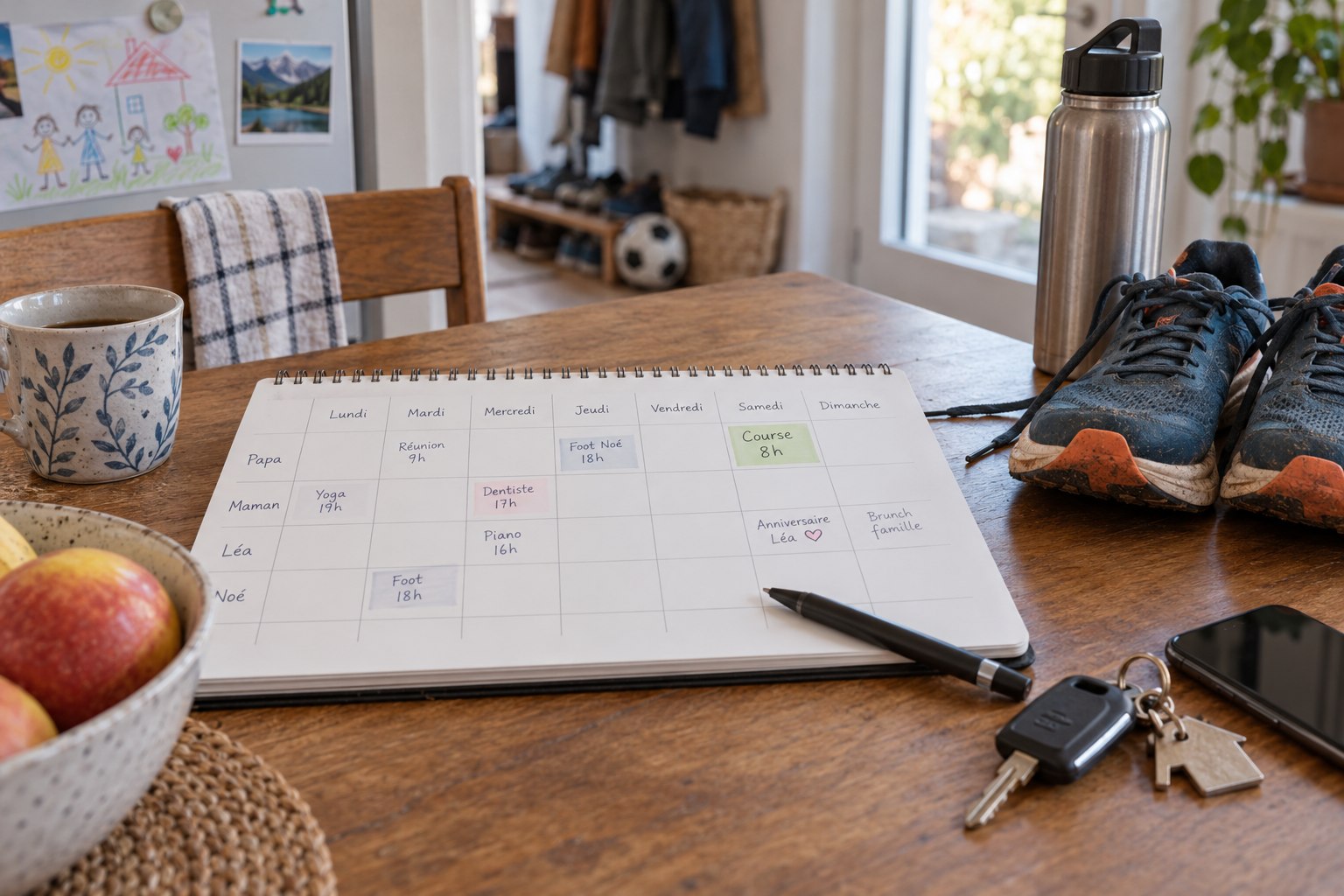
Put the whole absence on the calendar
Include changing, travelling to a start if necessary, running, returning and anything needed before you are available again. A forty-minute run may require a longer absence. Calling only the running portion your time away can create a mismatch between what you promised and what another person experiences.
Begin with the commitments that cannot move: collection times, appointments, shifts and agreed care responsibilities. Then look for a genuine gap rather than placing a run over an existing obligation and hoping it can be rearranged later. The same principle applies to other people's activities, not only your own.
Use a shared calendar if it helps, but keep the labels clear. An entry such as 'away until 10:30, then taking over' is more useful than a vague running symbol. Agree who is responsible during that period. Do not assume that another adult being physically at home means they are available for every task.
Create a standard option and a smaller one
Choose an ordinary version of the outing that fits most weeks. A route from the door may remove travel time; a short local loop may make the return more predictable. If a particular outing needs a longer journey, treat that as a separate commitment rather than silently expanding the usual slot.
Then agree a reduced version for days when the window narrows. It might mean a nearer route, a shorter outing or a walk. The reduced option should still allow a calm handover at the end. It should not depend on running faster or leaving the next person waiting.
For example, if someone needs to leave for an appointment at eleven, plan your return early enough to change and exchange any necessary information. Do not set the running finish for precisely eleven and count the handover as instantaneous. The margin is part of the agreement, not unused time that must be filled with an extra loop.
Share the less visible work
Preparation can extend beyond the person who runs. If someone else has to find missing clothes, rearrange breakfast or manage a late return, the outing occupies more of their day than the calendar suggests. Prepare your own kit and make the return straightforward where possible.
Discuss how each person gets dependable time for their own interests. The arrangement need not be identical in minutes every day, but it should be understood rather than assumed. A recurring slot is easier to protect when everyone knows when their own commitments will also be supported.
If children are involved, use an explanation that matches the actual plan: where you are going, who is staying and when you expect to return. Avoid promising an exact minute when the route or transport makes that unrealistic. Keep adult contingency arrangements between the responsible adults rather than making a child responsible for reminding someone.
Agree how to communicate a change
Decide what happens if work overruns, someone becomes unavailable or the weather makes the route unsuitable. A short message before departure may be enough to choose the smaller option. A change that affects another person's commitment needs an actual agreement, not merely a notification that you will be late.
Carry a suitable means of contact and know the route's limitations. If reception is unreliable, do not make constant messaging the only backup. Choose an outing whose return can be managed within the arrangement, and share relevant plans beforehand.
Review the routine after a few weeks. Identify the real friction: travel time, a difficult handover, laundry or a slot that repeatedly conflicts with another activity. Adjust that detail instead of arguing about whether running deserves a place in the week. The aim is a timetable people can rely on, with enough flexibility for ordinary family life.
Keep exceptional outings visible as exceptions. A race weekend or a distant trail trip needs its own discussion about travel and responsibilities. It should not quietly inherit permission from an ordinary local running slot. Equally, another person's special event may temporarily change your usual window. Naming these cases separately makes the recurring agreement easier to preserve.