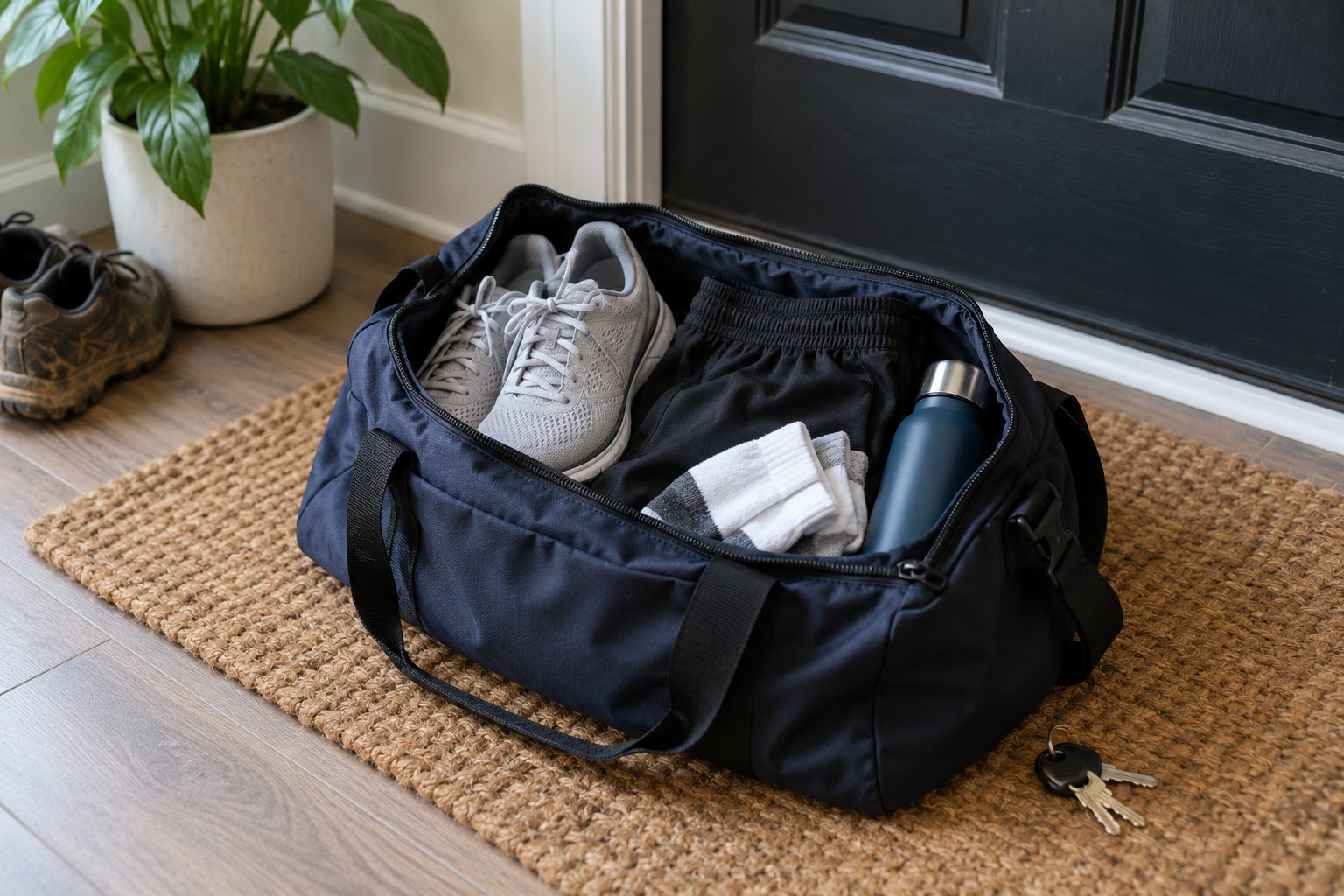
Pack for the ordinary outing
Choose the kind of spontaneous run the bag is meant to support: a local circuit after work, a park visit or a short outing while travelling. Pack the clothing and small items needed for that use. A bag prepared for every possible scenario becomes heavy and difficult to check.
Keep keys, identification and payment arrangements appropriate to the journey. If some essentials normally live elsewhere, put a visible reminder in the bag rather than pretending the bag is complete without them. A note saying 'add phone and house key' is more useful than discovering their absence at the start.
Separate dry clothing from shoes and any used items. Use compartments or simple bags in a way you can recognise quickly. The goal is to see what is present, not to make the contents look impressive.
Reset it after use
Remove wet clothing, rubbish and anything that needs cleaning as soon as practical. Replace the clean items before returning the bag to its usual place. A bag that appears ready but contains yesterday's damp socks creates a new obstacle at the next opportunity.
Check consumable or powered items when relevant. A lamp needs an actual charge check; a bottle needs cleaning rather than merely topping up. Follow each item's care instructions. Do not keep food or products in the bag indefinitely without checking their condition and storage requirements.
Leave room for the weather decision. A ready bag does not mean its clothing suits every temperature or route. Add or change the necessary layer before departure and choose an outing that fits the available time. Spontaneous should mean less administrative effort, not less attention to conditions. Every so often, remove items that never serve the intended use and confirm that the remaining set still reflects the runs you actually take.
Store the bag somewhere that suits its contents. A permanently hot car boot or a damp shed may be a poor place for electronics, food or textiles. Read the relevant storage guidance and keep sensitive items elsewhere, using a departure checklist to add them when needed rather than leaving them exposed for convenience.