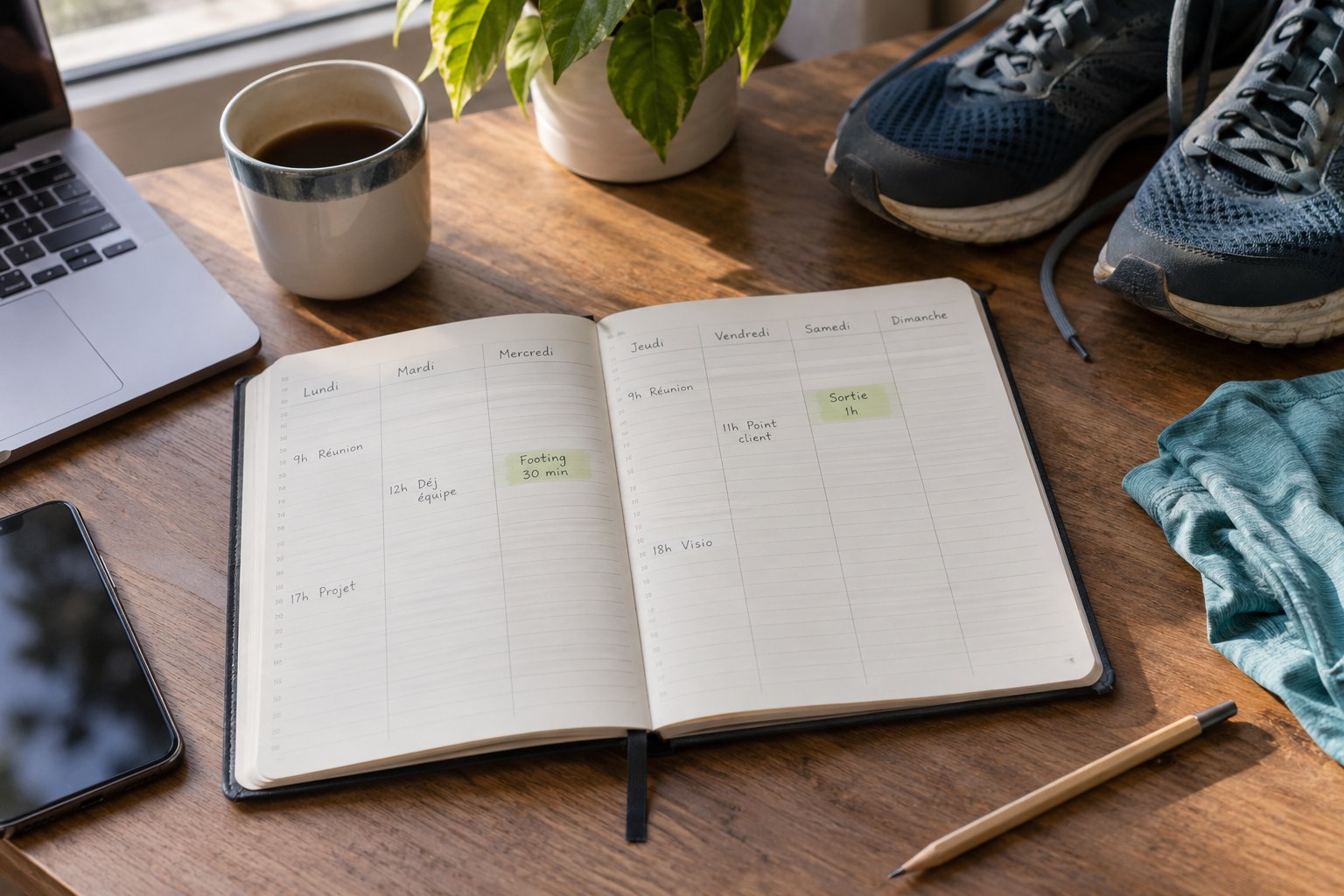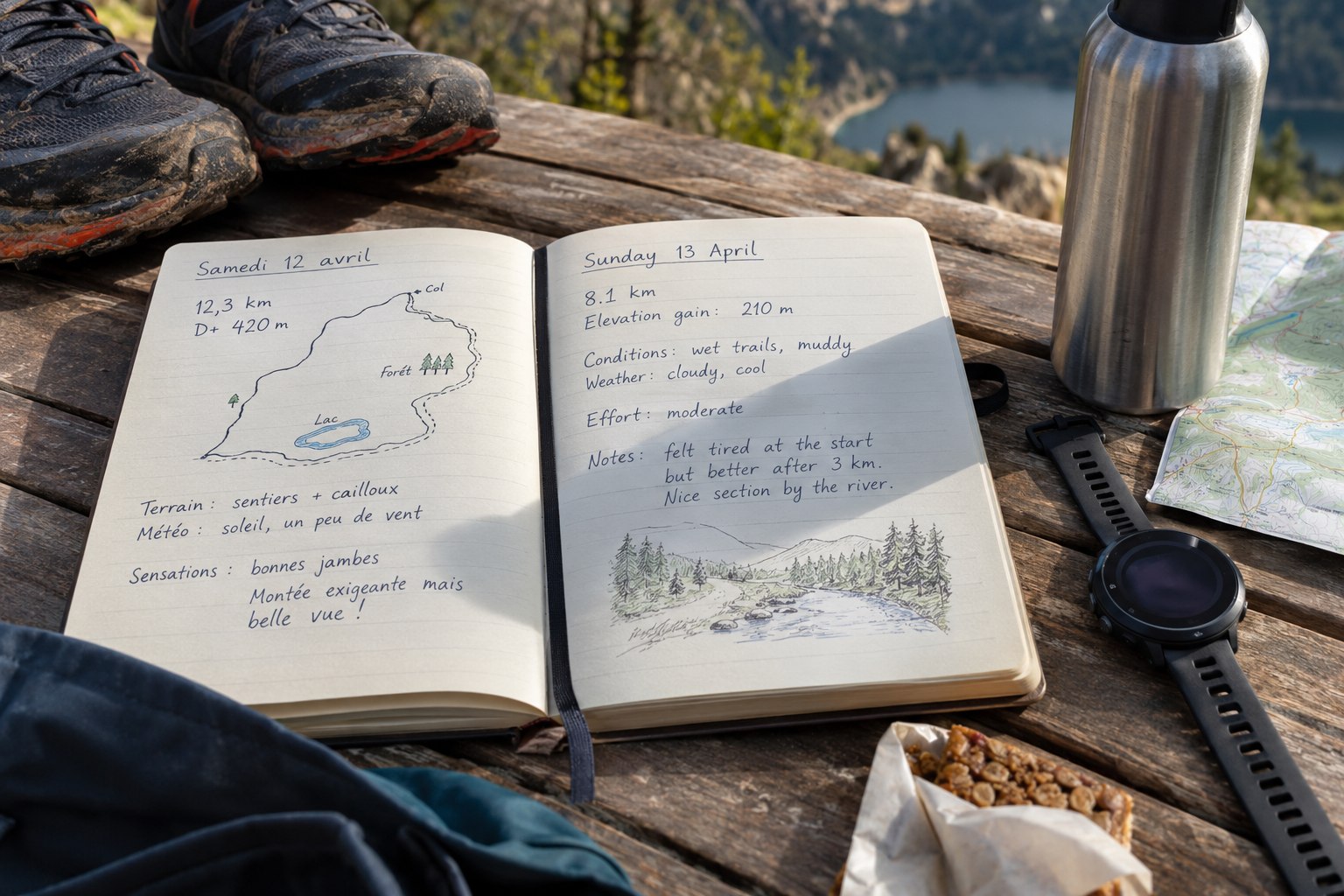
Match the question to the comparison
If you want to know whether a route fits a lunch break, compare the whole time away from work. If you are checking whether a pocket arrangement improved, compare how securely it held the contents. Average pace is not the right answer to either question.
Write the purpose of each outing beside its result. A run with a beginner friend, a route inspection and a timed session should not be ranked as though all three aimed to produce the same number. Their success depends on different decisions.
For a comparison intended to track performance, be more selective. Route, direction, surface and effort should be sufficiently similar to make the question meaningful. Even then, one pair of outings provides only a limited observation.
Account for what the clock includes
Check whether you are looking at elapsed time or a figure that excludes pauses. A stop for traffic still affects the real outing even if the app removes it from moving time. Two summaries can appear comparable while using different settings.
Notice route changes too. An extra turn, a closed bridge or a detour through a crowded entrance may explain a difference more directly than a theory about fitness. Keep those changes in the notes rather than trying to remember them weeks later.
If weather or footing differs substantially, describe that instead of calculating a correction you cannot justify. 'Headwind on the exposed return' is useful information. An invented exact adjustment may make the result look precise while adding uncertainty.
Try a comparison that has an actionable answer
Suppose two lunchtime outings use the same park. The first records a quicker moving pace but includes a long wait at the crossing and a rushed change of clothes. The second uses a different entrance and records a slower moving pace, yet gets you back comfortably within the break. If the question is which arrangement fits work, the second route may answer it better.
Record the time from leaving the workplace to being ready to resume, not just the time when the watch was running. Then separate the parts you can change: where you cross, how far the entrance is, whether your bag was ready and how long changing took. This produces several concrete choices without making speed the explanation for everything.
For a different question, such as whether a new route is suitable for a relaxed social outing, compare interruptions, space for passing and how easily the group stayed together. A quieter path might be worth a slightly longer connection. The appropriate evidence follows the question rather than the fields that an app happens to display.
Avoid giving every criterion an artificial numerical score. You can write that one entrance saved a confusing crossing while another gave a simpler return. If the tradeoff depends on the day, retain both options with their conditions of use instead of declaring one route permanently superior.
When the comparison cannot answer the original question, say so. Two outings with different purposes and substantially different conditions may still supply useful notes, but they do not need to produce a verdict. You can plan another observation if the decision matters, or leave the issue open if neither option creates a problem.
Look for a decision you can use
After comparing, choose a practical next step. Perhaps you should leave earlier, repeat the same route in a comparable setting or stop using a particular measure for social runs. A comparison that only produces a judgement of good or bad gives you less to work with.
Keep improvements that the clock cannot see: fewer navigation stops, better pocket access or a calmer return. Equally, a faster outing that disrupted the rest of the day may not be the arrangement you want to repeat.
Review several relevant outings when a pattern matters. Let a single unusual day remain unusual until there is enough context to understand it. The point of comparison is to improve choices, not to make every run compete for a place above the previous one.