Identify the surface problem
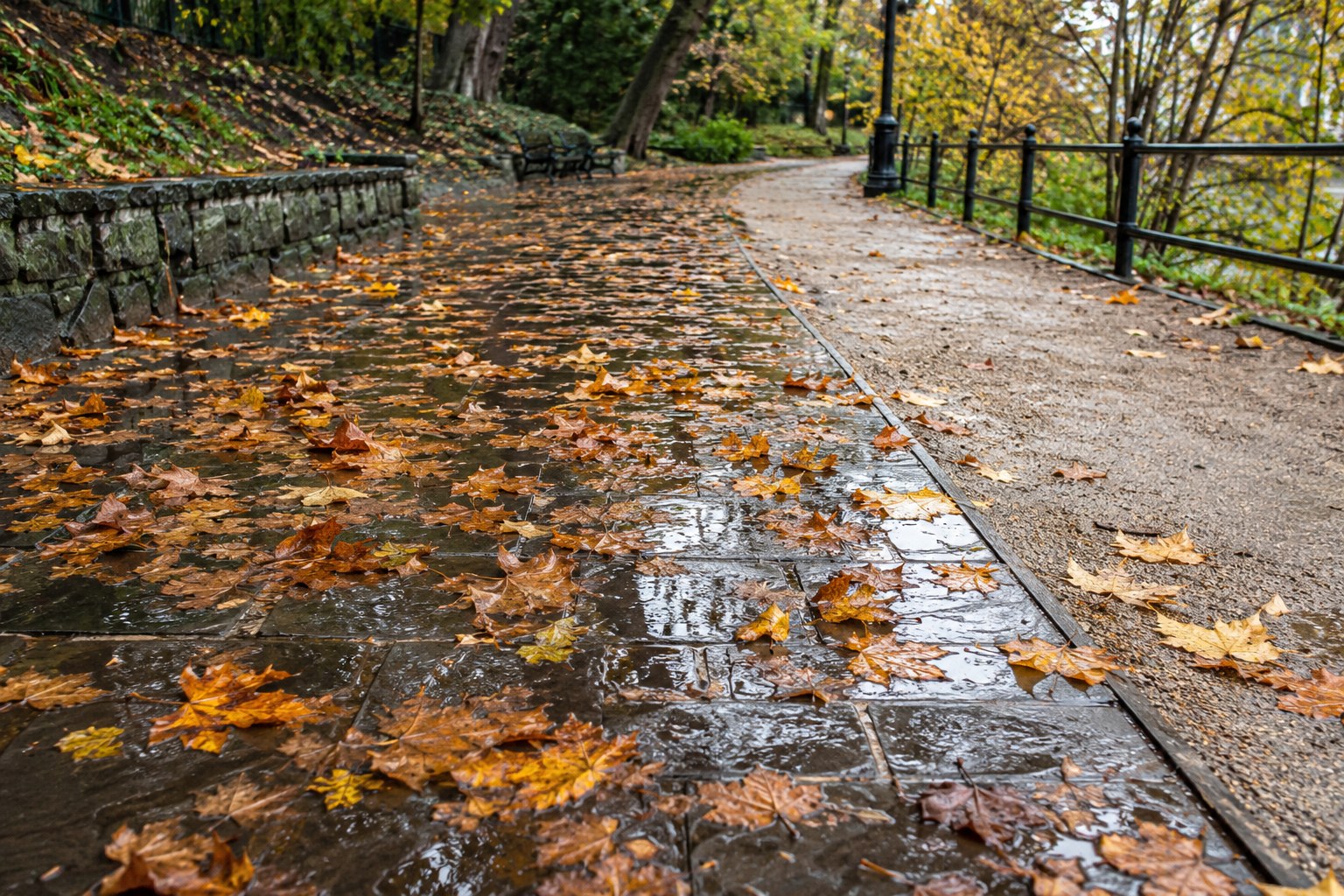
Look for the particular change: wet leaves hiding the path, polished paving, mud at a gate or a frozen shaded section. These are different situations, and one successful step does not prove the whole stretch has consistent grip. Slow before reaching the uncertain area and leave room to choose another line.
Do not step into traffic or onto a steep bank just to avoid a patch on the path. An alternative needs to improve the whole situation, not only the surface under one foot. If the only available detour creates a different hazard, turn back or choose another route.
Consider how the same section will look on the return. A place manageable in daylight may be harder to read later, and a path can become more churned up as people use it. Do not rely on the outward visit as a guarantee.
Change the session as well as the line
If the planned work depended on a predictable surface, moving a few metres aside may not preserve that purpose. A faster session may need to become an easy outing, a walk or a postponement. Keep the decision separate from disappointment about the original plan.
Avoid using other runners as proof that the ground is suitable for you. They may have a different route, footwear or tolerance for uncertainty, and you cannot see what they have already encountered. Make the choice from the conditions you can assess.
If you are with a group, communicate the change before people reach the patch. Stop in a suitable place to agree an alternative rather than pointing backwards while continuing at speed. Keep anyone unfamiliar with the area included in the revised route.
Update the route notes
Record the location and conditions that caused the change, especially if the problem is likely to recur after rain or in shade. Describe it precisely enough to recognise on the next visit. A general note that the entire park was slippery may be less helpful than identifying one paved ramp.
Check again next time rather than assuming the patch remains unchanged. Temporary works or maintenance may solve it, while another section may deteriorate. The useful habit is reassessing the surface as part of the route, not creating a permanent rule from one outing.