Sort by the moment of use
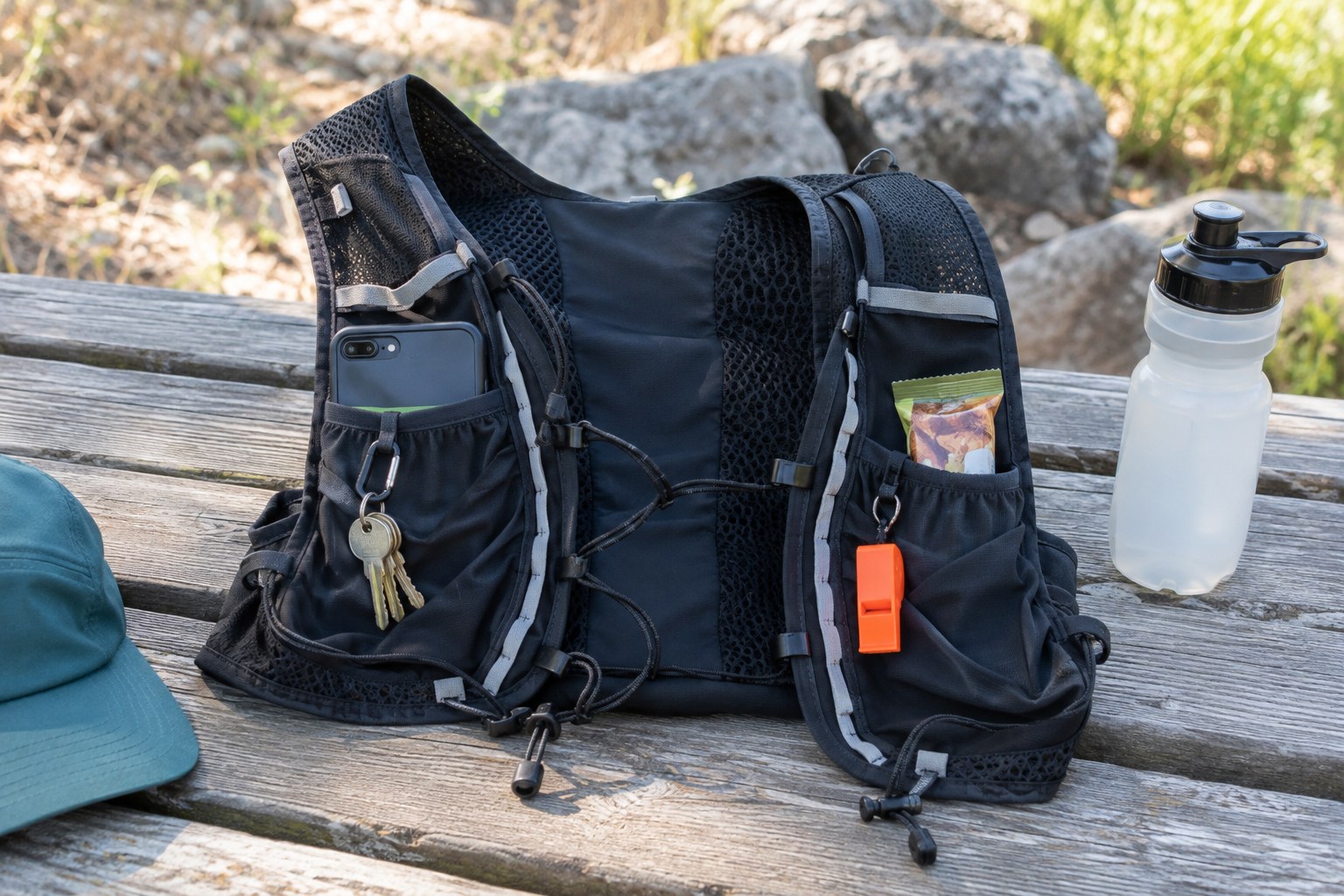
Lay out keys, phone, food, light, map and any other items required by the outing. Separate things used frequently from those kept for a stop or contingency. Then inspect the actual pockets: opening direction, closure, stretch and accessibility while worn. An item’s importance does not automatically mean it belongs in an open front pocket.
Put keys in a secure compartment that you do not repeatedly empty. Keep the phone protected and reachable at a safe stop. Give food and its eventual wrappers separate places. If a pocket is shared, check that removing one thing does not pull another out with it. Try the action rather than judging only from the space available.
Keep hard objects from competing
Avoid placing several rigid items where they knock together or press against the body. Move them within the intended compartments and test the loaded vest with a short walk. Notice whether a small object migrates to the bottom or becomes difficult to retrieve. A pocket that looks ideal while the vest is flat can behave differently once stretched across the body.
Use small pouches only where they simplify the arrangement. Too many nested bags can make a quick task slower and hide whether an item is actually present. Label a pouch if its purpose is not obvious, but keep the system understandable without a complex code. A companion should be able to find an agreed essential item if you tell them where it is.
Rehearse three retrievals
Choose one frequent item, one clothing item and one contingency item. With the vest loaded, stop and retrieve each in turn. Confirm that you can put it back and secure the pocket without spreading the contents on the ground. Repeat with gloves if those are likely. This small rehearsal reveals access problems that a visual packing check misses.
Check again after drinking some water or removing the jacket, because the load changes shape. Keep loose straps and empty packaging controlled. If an item becomes inaccessible at that stage, revise its location rather than memorising a workaround that depends on perfect conditions. The arrangement should remain usable through the whole outing.
Reset without preserving unnecessary clutter
Empty the vest after use and account for the small items before washing or storage. Remove waste, dry what needs drying and return essentials only when ready. Review anything carried repeatedly without a clear purpose, while retaining what the route genuinely requires. A lighter, clearer system comes from understanding the outing, not from removing important equipment to reach an arbitrary weight.