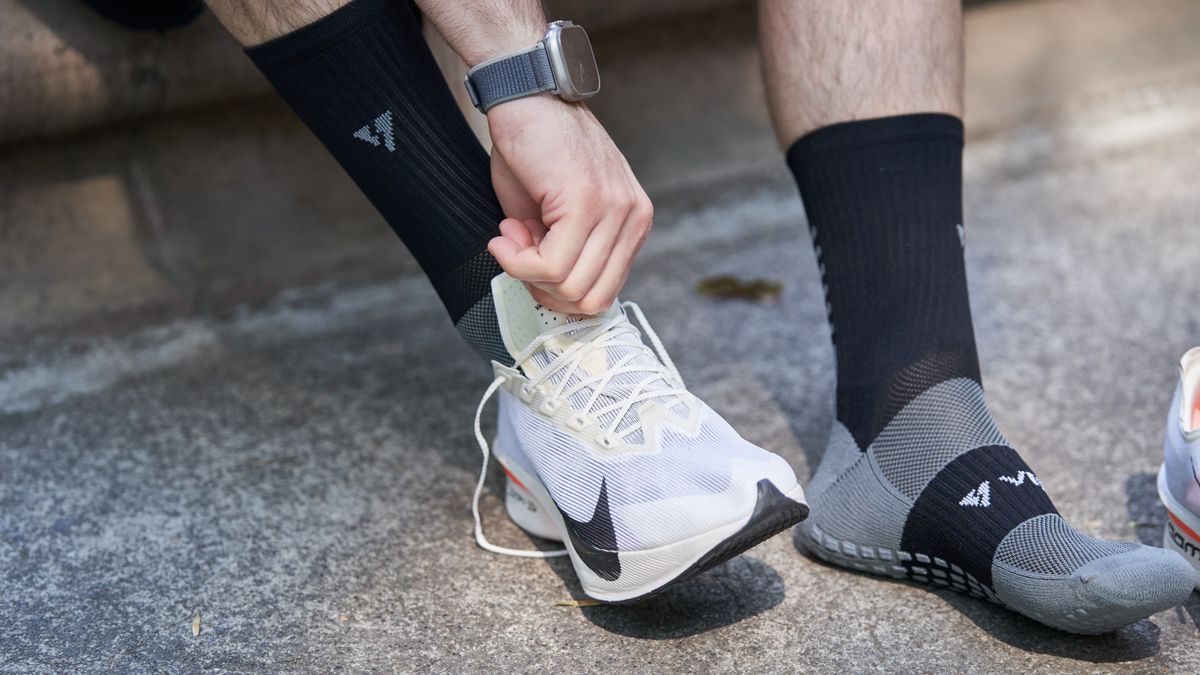
Clean enough to see the structure
Follow the shoe’s care guidance to remove dirt that hides seams and edges. Inspect in good light, with both shoes beside each other. Comparing the pair can make a new difference easier to notice, but it does not tell you by itself what caused it. Keep the observation specific rather than turning every asymmetry into a diagnosis.
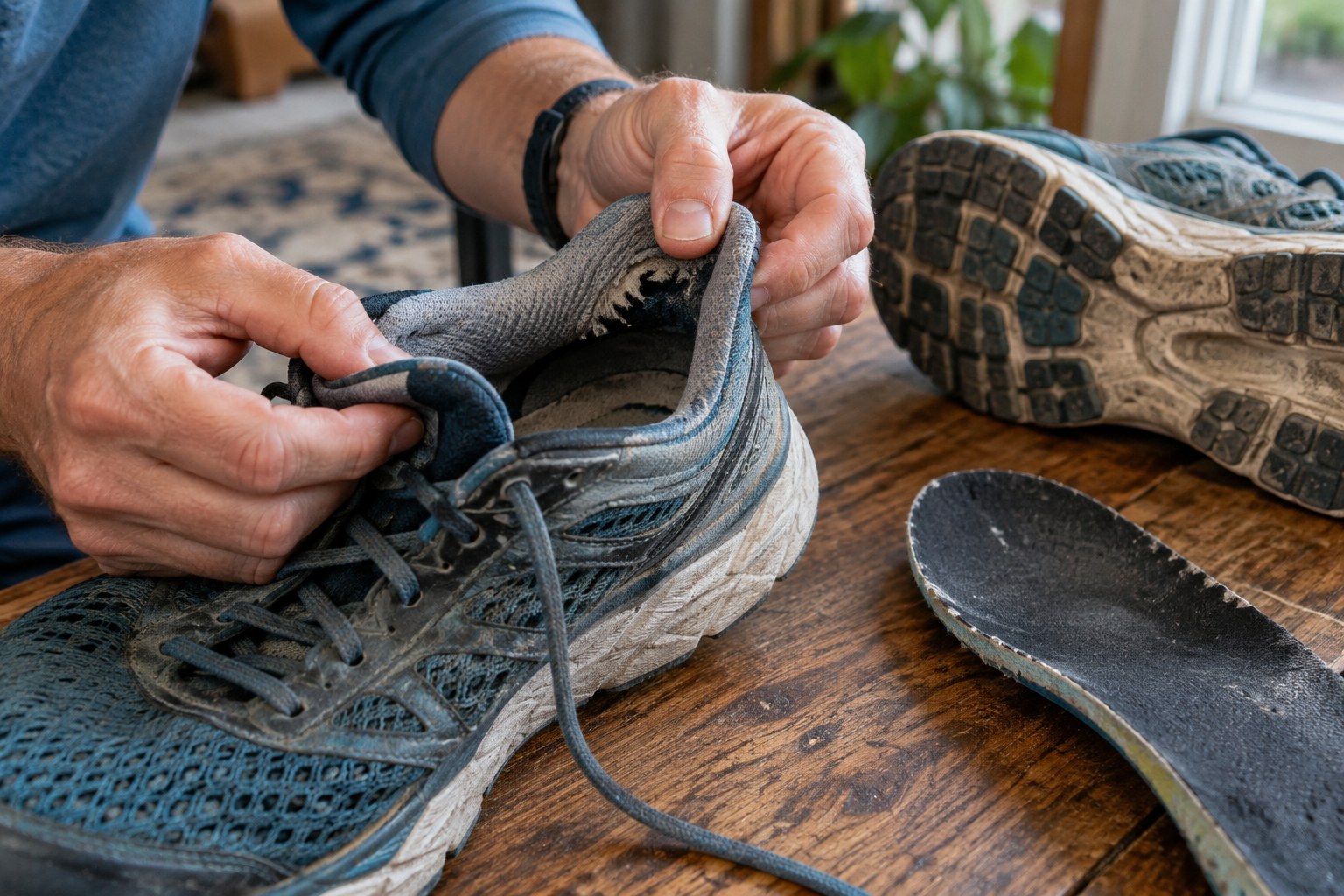
Look at the upper around the toes and sides, the heel lining, lace holes and tongue. Check for tears, loose stitching and areas where a hard part has become exposed. Examine the laces and their fastening system too. A shoe may have visible tread remaining while a damaged upper no longer holds the foot as intended.
Inspect joins and moving parts
Look around the edges where components meet. Notice separation, unexpected movement or a piece that catches when you handle the shoe normally. Do not pull aggressively to see whether a small gap can be made larger. If something appears structurally unreliable, set the pair aside and seek appropriate assessment rather than conducting a destructive test at home.
Remove the insole only if designed to be removed, then check its condition and position. A folded or displaced insole can change the feel without being an outsole problem. Keep any replacement compatible with the intended setup and do not assume a different thickness leaves fit unchanged. Reassemble correctly before evaluating the shoe on the foot.
Connect observations with use
Recall any new slipping, pressure or instability noticed during the last outing. Describe where and when it happened, along with the surface and sock combination. Avoid deciding solely from a generic mileage threshold or a photograph. The question is whether this particular pair remains suitable for its intended use, including the condition of parts that are difficult to see from underneath.
If a defect affects secure use, do not save the pair for a more demanding route simply because you dislike discarding it. Explore a suitable repair or replacement through the maker or fitter where appropriate. Keep photos and the product reference if asking for advice. A clear description of a separating edge or worn heel lining is more useful than saying the shoes just feel old.