Build the actual load
Set out the phone, keys and other items for the outing. Check the belt’s intended capacity and pocket design before trying to fit everything inside. A pocket that closes around a phone may still leave a hard corner pressing against you. Put keys in a secure compartment and keep them from scraping a screen or repeatedly striking another object.
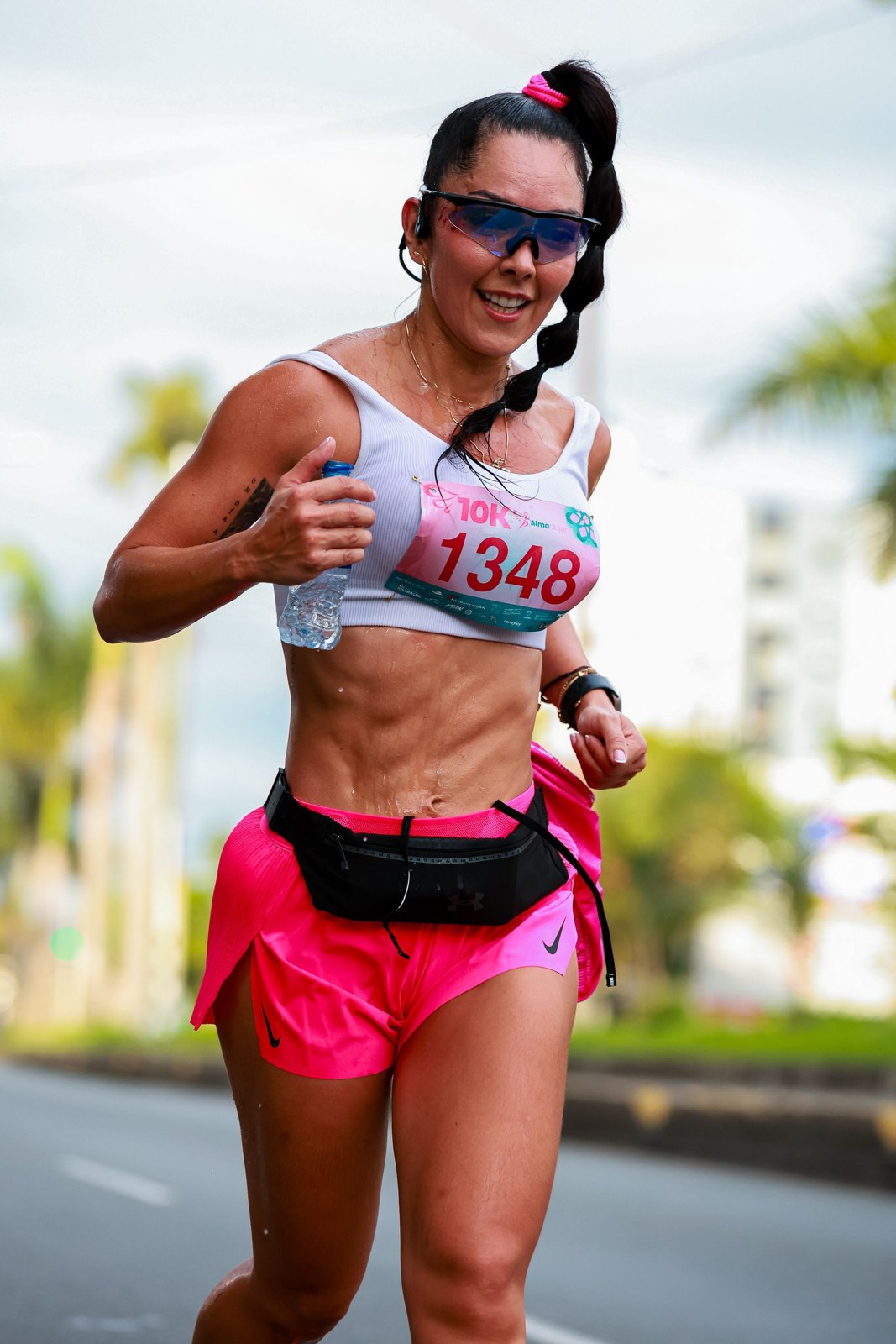
Position the belt according to its instructions and fasten it comfortably over the intended clothing. Some designs are adjustable and others depend on selecting the correct size. Do not assume that an oversized belt can always be rescued by pulling harder. Check whether the loaded pockets sit where the design expects them to sit.
Watch the load move
Walk and then jog briefly near home. Identify whether the whole belt moves or a particular object bounces inside a pocket. Those are different problems. Repositioning a phone or using the proper retaining loop may address an item moving within the belt; a belt that rotates or slides as a unit may need a different adjustment or size.
Change one thing and repeat the same movement. Avoid adding several improvised knots at once, since you will not know which change helped. Check that the fastening remains comfortable when you take a full breath and bend. A belt that stops bouncing only when painfully tight is not a satisfactory fit.
Compare two packing arrangements with the same load
For a phone, keys and a small food item, try the phone in the intended central pocket and then another permitted position if the belt offers one. Keep the total load unchanged. Walk the same short circuit and compare rotation, pressure and access. If the improvement only appears after removing something essential, the test has answered a different question: the belt may be suitable for a smaller outing, not for the load you originally planned.
Check the arrangement after sitting briefly and standing again, as you might at a stop or while travelling to the start. Clothing can shift beneath the belt, changing the position that felt stable indoors. Restore the fit while stationary and note whether it remains easy to reproduce. A clear, repeatable adjustment is preferable to a setup that works once through a lucky distribution of objects but requires repeated experimentation every time you put it on.
Test access and the reduced load
Stop somewhere safe and take out the item you are most likely to use. Can you close the pocket again without rotating everything around your waist? Test with a partially emptied flask if you carry one, following its intended storage method. The arrangement can change as the load becomes lighter or less evenly distributed.
Finish with a short local outing before relying on the belt for a longer route. Record the exact load and clothing if the result is good. If it repeatedly requires adjustment, consider whether a different carrying method suits the amount of equipment better. A belt is one option, not a requirement to compress every outing’s kit into the same small space.