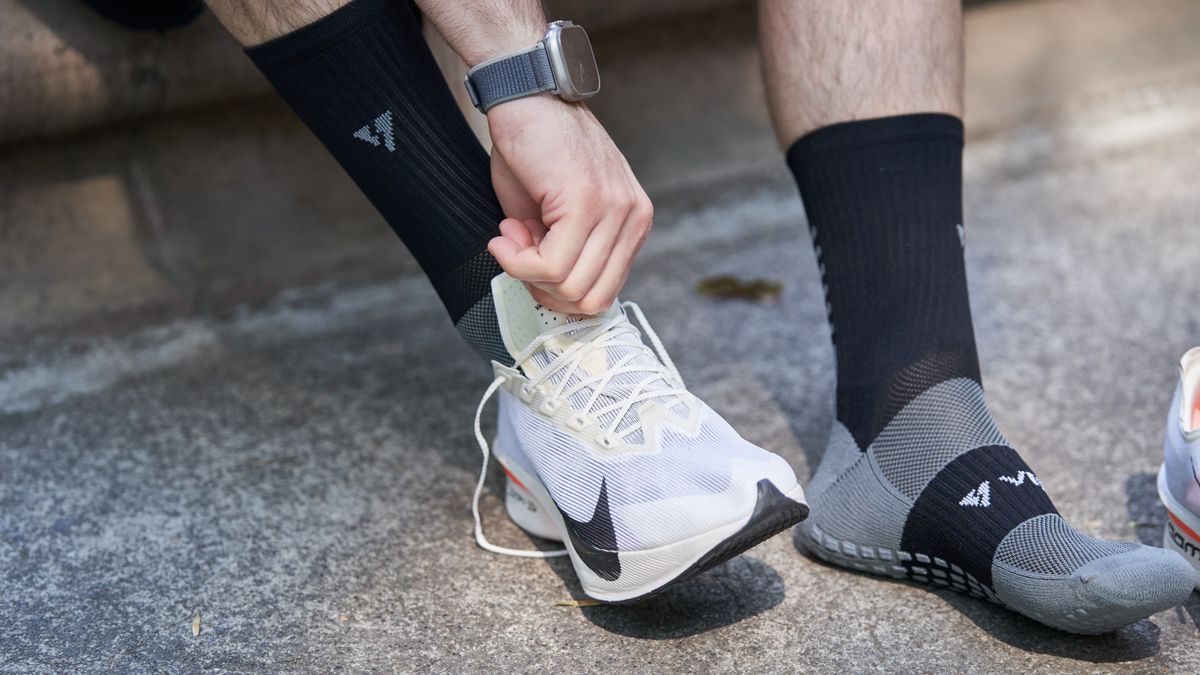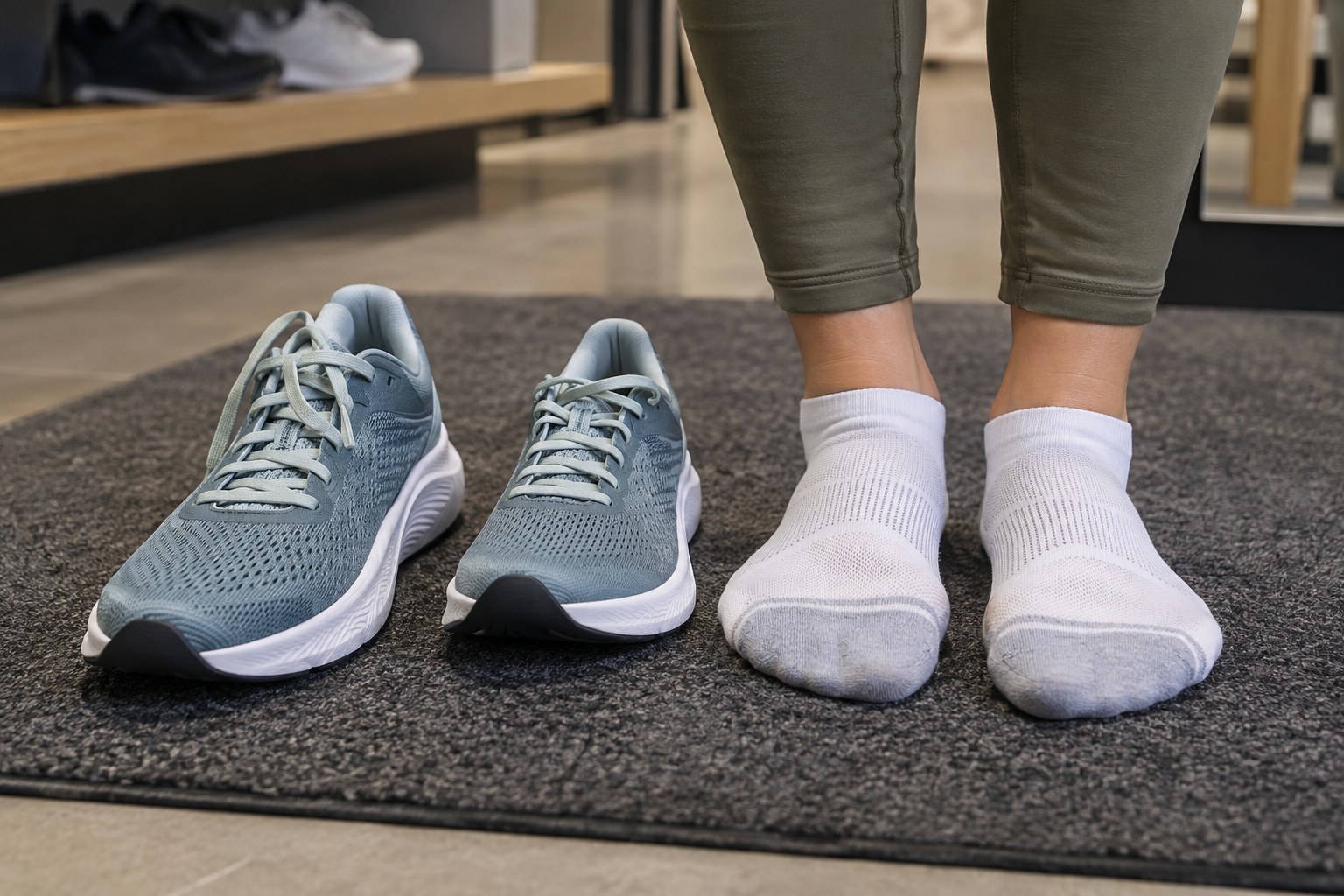
Compare complete pairs
Try both shoes in each size with the same intended socks. Wearing one size on each foot can provide an initial contrast, but it does not account for differences between your feet. Finish by trying each complete pair. Keep the lacing tension similar and make sure both heels are seated before judging the space.
Write down what you notice in specific terms: toes meeting the front during a slope test, pressure beside the forefoot or a heel that shifts on turns. Roomy and tight are useful starting words, but they can hide very different problems. The larger size may solve length while introducing movement elsewhere; the smaller may feel secure only because it presses where it should not.
Use the same movement sequence
Walk a short permitted route, turn in both directions and use a fitting ramp if offered. Repeat the sequence with the other size. Avoid testing one while seated and the other during a jog, then treating the impressions as equivalent. Ask staff about any trial facilities rather than improvising around obstacles in the shop.
Pause between pairs and record the result before hearing a sales recommendation. This keeps your own observation clear. If neither size gives a comfortable combination, compare another shape rather than choosing whichever flaw seems easier to tolerate. A numerical size is only one part of the fitting decision, and a familiar number from another model is not proof of equivalence.
Check the decision before using outdoors
Confirm the exact model, width option if offered and size on the box and both shoes. Similar versions can be easy to mix up during several comparisons. Read the return conditions and repeat an indoor check while those conditions still allow a change. Use your intended socks again, not whichever pair happens to be nearby.
Keep the brief notes even after deciding. They are useful when a later version arrives or when discussing a fit problem. Do not convert the result into a rule that you always need the larger or smaller size. The method is what transfers: a consistent setup, both feet, comparable movements and a willingness to reject both options when neither fits comfortably.