Begin with the vest’s instructions
Look for the flask type or dimensions recommended for the vest. Two containers with the same stated capacity can differ in width, length and base shape. A flask that enters the pocket may still sit too low to use comfortably or too high to be retained. If compatibility is unclear, ask the manufacturer before treating capacity alone as evidence.
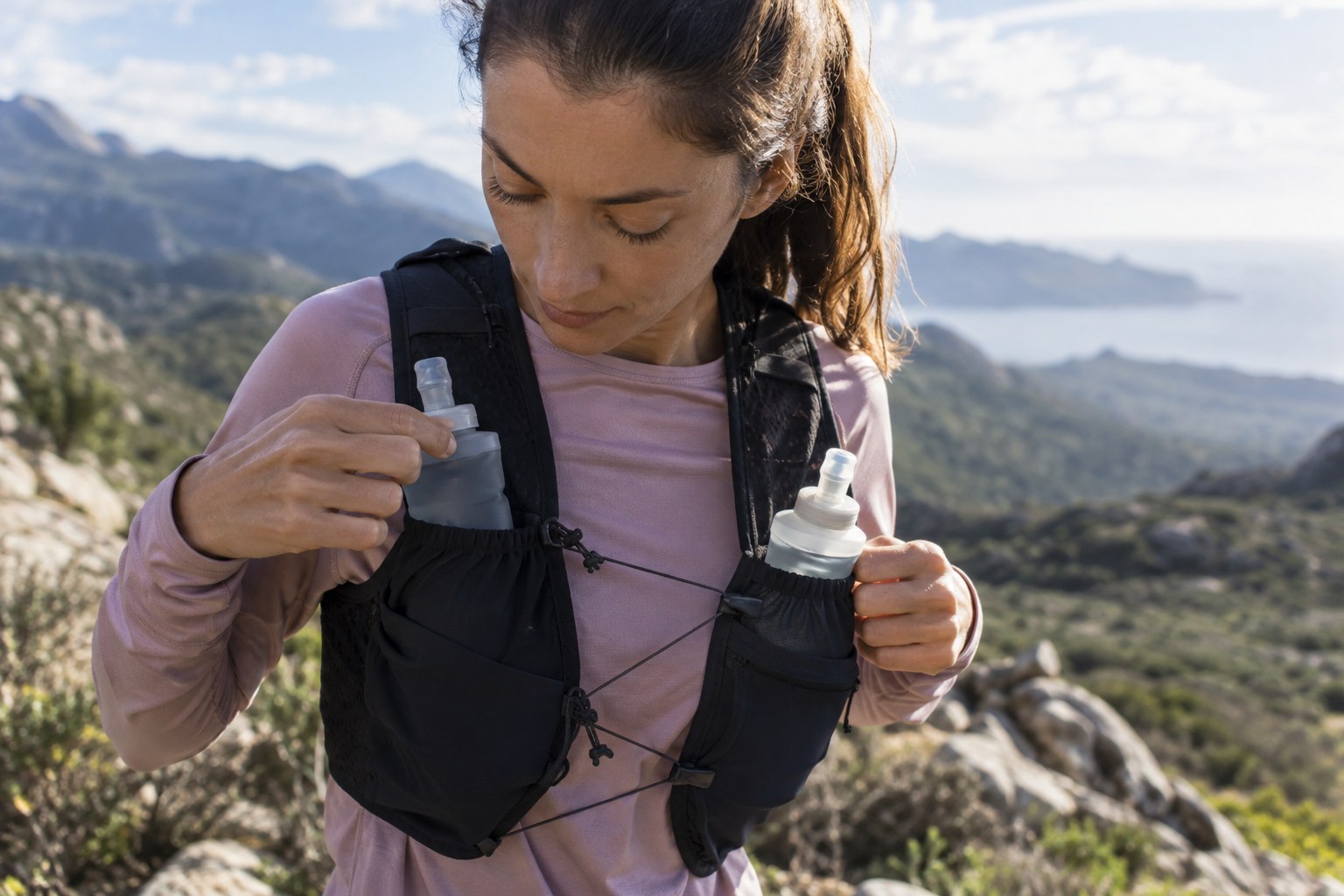
Check how the pocket holds the flask. There may be a loop intended to retain the neck or a shaped base that supports a particular design. Use these features as directed rather than stretching them around an unsuitable cap. The pocket should not need to be distorted so far that its seams or closure are visibly strained.
Test filled, then partly empty
Fill the flask within its instructions, close it correctly and check for leaks over a sink before loading the vest. Put on the usual clothing and adjust the vest with both sides arranged as intended. Walk and jog in a safe area, noticing whether the flask bounces, turns or presses a hard part against your chest.
Take out and replace the flask while stopped. Can you reach the cap or valve without an awkward pull on the pocket? Repeat after using some of the water. A soft container changes shape as it empties, so the full-flask test does not answer every question. Follow any retaining method provided for that stage rather than inventing a loose cord around the valve.
Rehearse a refill without unpacking everything
At home, take the flask out, open it, refill within its instructions and replace it in the loaded vest. Check where the cap goes during the process and whether the pocket accepts the filled shape without excessive pulling. An opening that is easy to fill on a kitchen counter can be awkward when the vest remains on your body. It is reasonable to take the vest off at a suitable stop if that makes the sequence controlled.
If you carry two similar flasks for different contents, use a clear method to distinguish them that does not interfere with cleaning or the closure. Check the maker’s guidance for permitted drinks and temperatures rather than assuming every soft container accepts the same use. Keep the trial modest and practical: a secure closure, an identifiable flask and a pocket that retains it after the refill matter more than shaving a few seconds from the process.
Include cleaning and replacement
Inspect the opening and detachable parts to understand the care routine before buying several flasks. Check the exact product instructions for cleaning and drying. A design that is compatible with the pocket but difficult for you to maintain may not be the most suitable choice. Do not assume another flask’s dishwasher or temperature guidance applies.
Record the model and size once the combination works. Keep lids and components with their matching products unless the manufacturer confirms interchangeability. A cap that appears to screw on is not proof of a secure seal. Before each outing, check the assembled flask and the pocket retention again, especially after replacing a part or changing the load in the vest.